All posts tagged: CAT Preparation

How to improve your QA percentile – Part II

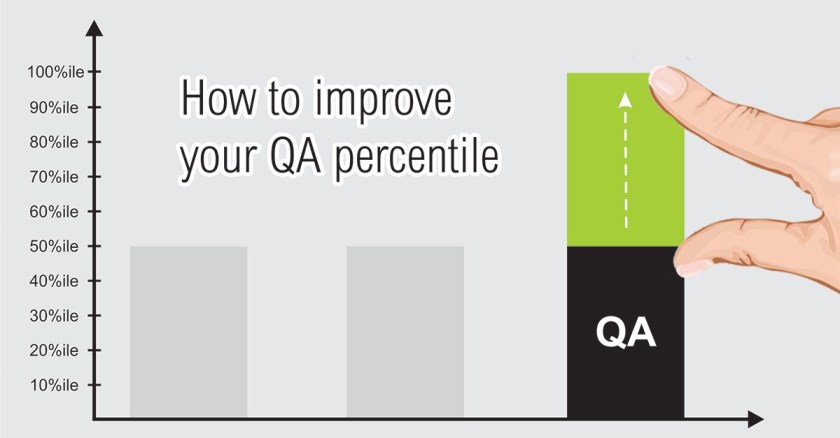
In the first part of this post we covered the first building block to achieve higher scores and percentiles on CAT QA — accuracy. In this post, we will take up the next one — selection. QA is the section that gets the maximum attention of test-takers of all stripes and there is always a litany of frustrations and queries that plague aspirants — I am good at Math and like Math but my score just does not seem to go up! Should one attempt the long Arithmetic questions? I feel every problem is do-able! I get stuck for long with one problem without realising it I realise there were many problems I could have solved when I analyse the test The answer to all of these questions lies in the way you select questions and the way you navigate between them.

How to improve your QA percentile – I

Unlike the other two sections, QA is a section that has a direct link to what you have done in school and college. Most of the topics that are tested on the CAT have also been a part of the school curriculum. This I feel is the biggest roadblock in front of test-takers wanting to achieve higher scores on the CAT Quant because high Math scores during X and XII exams do not automatically imply doing well on CAT Quant.

DI-LR: Improving your core strength

DI-LR, as we know, has been the nemesis of many a CAT aspirant over the past few years, and every serious aspirant asks me that — how do I improve my DI-LR skills. Over the last two years, I thought that it is primarily about two things — set selection and comfort with mathematical reasoning (many sets over the last few years have been based on Arithmetic and Modern Math concepts). But even so, I knew that to select the right sets and then solve 4 sets, one needs to solve the two easiest sets quite fast, and this pace would come from the regular practice of DI-LR sets (irrespective of difficulty level) and Sudoku. Even then I still felt that a lot was left to the “natural” capability of the student. There was nothing concrete I could communicate (apart from a 5-minute average for Medium Sudoku sets) like say a particular reading speed or a particular set of concepts.

How to prepare for a CAT retake – Part II

In the previous post, we discussed the mindset with which one should approach a CAT retake; in this post, we shall look at a few more aspects with respect to a successful CAT retake. Since each one of you readers will have a different back story with respect to your first attempt and there will also be some non-IMS students among you as well, the focus of this post will be a bit wider.

How to prepare for a CAT retake – Part I

Most of the institutes have given out their calls (or at least most of you know your chances) and many of you might be planning to retake the CAT. For some of you, it might be a case of almost getting there but missing out because of one poor section or just missing out on the overall percentile. For others, the CAT-day might have been a bad day at the office and you knew straight away that nothing much was going to happen. On my first attempt, I fell into the latter group — I knew I was out of my depth when I saw the Quant paper, there was no way I was going to clear the cut-offs. This despite consistently doing very well in the Sims leading up to the test. I decided to take another shot since I was very clear that it was not out of my league. This post, in three parts, is for all those re-takers who are NOT hoping to get lucky next time around but want to ensure that …

CAT Preparation: Changing The Default Settings

Every year a lot of young men and women toil away at this thing called CAT preparation. The most sincere and determined ones, come in full of energy and enthusiasm to do whatever it takes to ace this test and get into the hallowed portals of an IIM. But do they come in with a blank mind ready to understand what this test is all about and attune themselves to it? The answer as we all know is, NO. A CAT aspirant beginning his prep will be at the least 20 years old, long enough to start the test with a sizeable psychological baggage — a mental make up that stems from one’s experiences and successes with education & tests throughout school & college.