Latest Posts

My MBA Journey: IIM-L

Recently, a colleague was asking my if I knew any fresh B-school graduates for some events and I told him that of late given that I am no longer actively teaching or running cities, most of my students are Eklavyas, who just read my blog and attend a few sessions, and not Pandavas!

Kaushik, was a student of mine back in my IMS Chennai days but as you will read from his post, we did not interact much. He got in touch with me whenever he had to make a big decision, which, if I am not wrong was once a year before or after each of his CAT attempts. In a way he was an Eklavya who occasionally spoke to me!

So, when Kaushik texted me a fortnight ago, with a DP that wasn’t his face, I had to figure out who he was and asked him to confirm if my hunch about his background and appearance were right! And thankfully, I was.

Kaushik had an exceptional academic profile, was a CA, worked in big-brand firm, so the MBA was a big decision for him since it had to make complete sense. Given this I thought it would make perfect sense for him to write down his experience of his time at IIM-L (given that my Palaeolithic-era experience no longer counts) as a non-binding gurudakshina 🙂

And added context for this post is also that given the huge rally behind the ABC or nothing war cry, L or another shot at ABC is primed to arouse peak FOMO!

After I read Kaushik’s post, I learnt three things — sad, bad, and glad — the name of the intra-institute sports contest was changed from Sikandar to Sangram (sad); the name of the management fest was hyphenated from Manfest to Manfest-Varchasva (bad — I remember hearing the word varchasva in Gangs of Wasseypur, if my memory serves me right); and name of the music band, of which I was a part, continues to be the same, 3.4 (glad)!


The Journey of a lifetime at IIM Lucknow

Tony is someone whom I admire. I call him by name rather than ‘sir’ because, one – he’s a friend who’s always there for you, and two – he’s young as ever. I pinged him a few days ago to give an update on where I was headed next, which is when he asked if I could pen down my experience at L. I was hesitant initially, but decided to go ahead since it was a transformational journey. It’s my first attempt at penning down any experience of mine. Apologies if it deviates from any accepted structure.

Disclaimer – My views are purely based on my two-year journey (2019-21) at IIML.

Why do I call it the journey of a lifetime? Because, I had almost decided to not take this up even a day before I left for Lucknow, to now being grateful for the wonderful journey at L. Our batch could emerge victorious despite these tough times during covid.


My tryst with CAT

Enrolled with IMS Chennai, but couldn’t attend more than 5 sessions owing to work commitments. All I knew that year was that it was a 3 hour test with three sections. Yet, walked in to give CAT’16 since I had registered. Unexpectedly scored 97.07%ile. Converted IIM Indore. But, wasn’t sure if I wanted to join. I am a CA, was working with a Big4 back then and was advised by a relative that it won’t make much difference by taking it up. Also, since it was my first attempt, Tony advised that I could try again. Next year, the story repeated. Busy with work, no prep, walked in and ended up with 96.47%ile. Again, IIM Indore shortlist, but didn’t appear for WAT-PI.

Quit my job in July’18 and enrolled in IMS Hyderabad. Slightly more serious this time. Yet, didn’t put in requisite efforts. Just attended the sessions, didn’t practice and attempted very few mocks resulting in additional pressure. Result – 92.98%ile. I was reflecting on the past few months when I could’ve prepared better. This score, I thought, was the end of everything. But, a surprising twist came up – IIML’s shortlist. The additional credit for being a CA with ~2.5 years of workex, and academic profile would’ve offset a low CAT score.

Two important lessons –

  1. Practice and speed are very critical
  2. Its very important to not reel under pressure. I’ve scored more when I knew nothing about CAT with no performance pressure

Before my WAT-PI process, I had almost made up my mind to pursue MBA from USA. So, walked in with no pressure for WAT-PI, while I was surrounded by extremely anxious candidates. Converted in the first list, but was still exploring the US MBA. One major hurdle for the US admit would be my break in service. So, eventually ended up going to Lucknow, albeit very reluctantly.


Enter IIM Lucknow

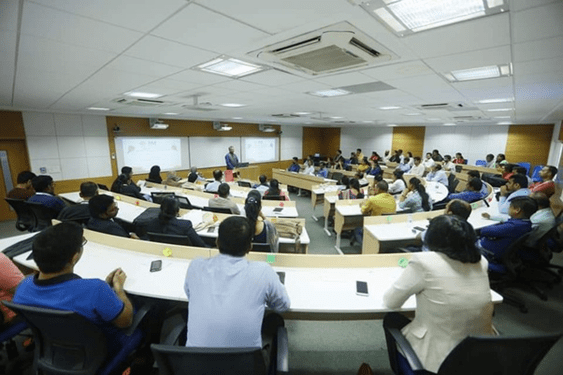
Travelled to the campus half-hearted, still unsure of whether it was the right decision. Found my way through the vast campus to my hostel room in one of the older hostels. My mind was prejudiced, with certain articles describing them as slums (just because they were older). From a dejected entry, this became one of my favourite hostels given its proximity to all major locations.

“Deadlines are sacrosanct” is a phrase that will constantly keep buzzing around in IIML, be it roll calls at 9:15 am or submissions. My hostel’s location for sure saved me from missing many classes and quizzes, when my peers had to rush from hostels far away.

One of the best things about IIML is the bonding between students across batches. From jittery intros during induction, they become your closest buddies almost instantly. You can cold call anyone to help you out at any time.


Life at IIML

The first term could be overwhelming for many, given we have to juggle between classes, placement prep, company sessions, assignments, quizzes, projects, events/activities, competitions, committee selections etc. But, eventually you get used to it and find time for everything you want to do. 

The key is to prioritize. I’ve seen people who had focused only on academics or sports/extra curriculars and others who managed to do various things. What and how much you want to do, is up to you. There’s no dearth of opportunities.

I was very meek, timid and silent initially. It is said that MBA is all about networking. So, I thought to make the best of the opportunities I have and participated in the selection process for becoming the class rep, thereby part of the admission mentorship team as well and got selected. Looking back, that would’ve probably been one of the best things that could’ve happened to me, enabling me to establish a strong bond with 60 future managers and leaders.
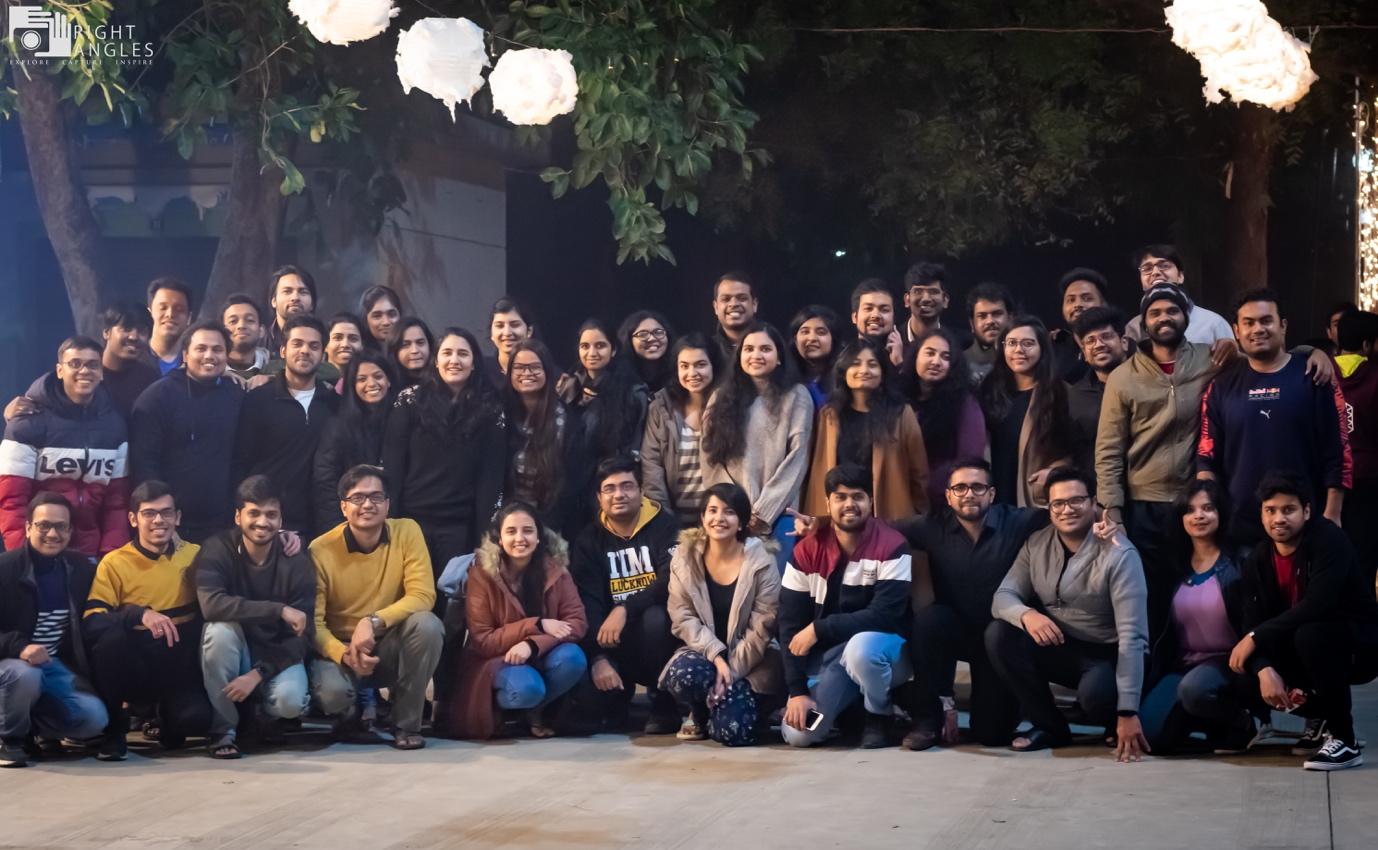
There are two things which I had strongly heard before joining. Here is my take on them –

“It is extremely essential to get through the committee selections. Else, your MBA will be doomed” –

While it is definitely great to get into a CCA, that’s not the end of everything if you don’t. Many haven’t been able to get into any CCA and yet, aced through their MBA.

“Summer placements will define your MBA”

It is definitely crucial and everyone should give their best. If you manage to crack your desired role in summers and get a PPO, it’s the ideal situation. Those who don’t land their desired role can either give up & rue the lost opportunity or work to fulfill their aspiration in finals.

I was largely indifferent to IB vs consulting during summers, although slightly inclined towards consult (a reason for me to pursue MBA). Converted a top IB during summers and went on to get placed in one of the top 3 global consulting firms in finals. It’s probably acceptable to explore your domain of interest during summers, while you are expected to have absolute clarity during finals.

You can build your profile a bit before summers though, by getting selected in CCAs, participating in competitions. However, your summer placements is largely dependent on what you’ve done pre-MBA. For final placements, it is largely about what all and how well you’ve been able to do during MBA. So, don’t get devastated if you don’t land the internship role you desire. You still have a great chance in finals, so long as you work towards it.

I’ve witnessed people switch from ops to marketing, marketing to finance/prodman etc. Its probably easier if you do your internship in the same domain as your target in finals, but you can always work towards your domain of interest even if your summers was in a different domain.

Also, before joining IIML, I’ve also been in your shoes, trying to garner a lot of information about the institute online. Like me, few of you might have come across some stuff written online in a negative taste about L’s placements. But, basis my experience, I can say that it isn’t true.

IIML for long has been known as a marketing campus. I’ve heard stories of how shortlisted students had to travel to another city to give their interviews for premier consulting firms and that there were limited opportunities in finance about two decades ago. But, the current situation is amazing. You have all premier firms across domains visiting the campus for placements.

From top tier consulting firms, investment banks, PE/VCs, banking, marketing companies to the best companies in prodman, ops, corp fin roles etc. you have them all. May be the number of PE/VCs and firms from a few other domains visiting could be slightly higher in ABC. But, IIML is not far behind.

IIML is known for is its academic rigour. I had also read stories of how toppers from undergrad ended up with low grades, and here I was, someone who had last experienced formal full time education 8 years ago. I was constantly fearing under-performance and failure even before going through the process.

Yes, you have many courses, quizzes, assignments, projects, mid-term / end-term examinations that come up once in 5 weeks and the attendance requirements are high. But, it is definitely manageable and not as tough as the perception built around it. Our apprehensions only worsen it for us.

I had a disastrous start, scoring the least across two sections in one of the first quizzes in a course in the first term. My fears started increasing. A senior managed to calm me down. Anyone could have a bad day. I didn’t build any further expectations of scoring well. The first term results were declared, and I managed to perform decently well. Stood 2nd in my section and amongst the top ~30/480+ in the institute.

I then realized that it’s the overall performance across various components that matters and one bad component need not ruin everything. I’ve had a few bad quizzes across both years, but ended up securing Institute Rank 5 at the end of 2 years and IR 1 in term 3 standalone. So, do not let your fears define your journey.


After the stressful first term, it’s time to pursue your passion and that’s when the selection process starts for clubs. Again, I failed to make the cut here. Nevertheless, kept moving on.

Then came the Student Council elections. Before L, I was introverted, timid, hesitant, pessimistic and was also carrying additional baggage in my mind as I was told that I was too good to attend b-school. I could have never imagined myself talking to so many people, campaigning door-to-door, addressing the batch etc. 

But, the few months I had spent at L taught me a lesson – it is ok to try and fail, rather than not trying itself owing to the fear of failure. That’s when I started developing this approach to make any decision – “What is the worst that could happen if I fail at this?” In the current instance, I’d end up in the same situation before the election. So, why not give it a shot instead.

These experiences pull you out of your comfort zone and help overcome your inhibitions. I won and was elected as the President of Student Council. This is by far my best experience at L – the kind of work, the exposure that it gave me amidst challenging covid times was amazing, and above all, the 8 of us in the Council became a family. From navigating through the transition from offline to online mode, to planning & executing the onboarding of batch during covid times was a memorable experience.

I’ve participated in a few case competitions and have been fortunate to taste success. I still remember my first national win. One of my besties had registered for a corporate case competition in Term 1 and had also made the submission for Round-1. I wasn’t even aware of this. We got selected for the national finals, competed with students from all the premier MBA colleges in India and won it eventually (we did work together for the final round though :p).


All good things have to come to an end

Reminiscing all the fun, cherished memories and experiences, it all came to a closure one fine day. The entire batch was capturing memories of the last of everything – night mess, party, exam, class, game etc. Having built strong friendships, a great network, it was time to bid adieu to IIML two months ago as we had completed our MBA. 2 years felt like a split second. I’ll be ever grateful for everything that IIML has given me.

All of us will need a support system through this journey. You’ll find yours along the way. Apart from my friends, faculty, parents, I had a very strong support system in my brother Harish. I dedicate my best allrounder medal to him. If not for him, I can’t imagine how many quizzes and classes I’d have missed. Despite staying in USA, he managed to wake me up every single day in the morning. There have been days when he had to make 20-25 calls to wake me up :p


Closing remarks

There could be many things you may desire in life. But, life will also present you opportunities in the most unexpected ways. It is up to you to make the best of it. Trust the process and cherish the experience. From thinking that it had all ended after CAT’18, to getting a SL from IIML with 92.98 %ile to converting in the first list, winning elections, being IR5, winning the best allrounder medal, converting great companies in summers and finals – I could never imagine this.

In hindsight, what if I had decided to not pursue MBA at IIML and instead tried giving GMAT or give CAT again in pursuit of ABC? What if I had gone abroad, invested significant money and got caught up due to covid. I don’t have an answer to any of this. There was every possibility of me failing again and not getting into any of these, or getting to these places and not performing as well as in L.

IIML, for me, has opened up the same path as what ABC would’ve offered. Probably a better one as well, who knows. I have had learnings for life and have overcome many inhibitions of mine. All thanks to IIML.

You need to experience every phase of this beautiful journey. If not for anything, it’ll still impart learnings, both professional and personal, that will aid you in life.

If you are contemplating on waiting for a year to get into ABC vs accepting an admit from L, also consider the fact that placement opportunities are very similar across ABCL. Also, there is a possibility that you might be pitted against extremely stronger profiles competing for the same role at say IIMA for instance, and you could thereby stand a better chance of converting the same great role at L as compared to A. Don’t overthink and complicate life. Take relevant inputs from your mentors and make an informed decision.

At the end of the day, whichever institute you eventually go to, own it and unite with it. Whatever you do, wherever you go, you’ll be carrying the brand with you. Infact, it’s the alumni who can build the brand of any institute further.

A generic view about anything in life – Nothing is perfect. You can choose to work towards getting the best out of what’s available and find a solution by owning up, or stand away and decide to just keep worrying & complaining about something not being right. The choice is yours.
My MBA Journey: IIM L – PGPSM

It was back in the 2015-16 season if I remember correctly that Sachin first managed to track me down by leaving a comment on my blog. I was handling the IMS business in Chennai, he was a student of IMS based out of Kolkata and he wanted some advice on quitting his job and taking another shot at the CAT. The thing with really mature students is that they need guidance only at a  really broad level, the rest they customize themselves (and there is the blog, anyway) and Sachin is one such individual.

He went on to get an admission into the relatively new Sustainability Management Program launched by IIM-L. Since then he has been doing quite well and has even played a part in helping an administration out during the pandemic. If you read his post you will find he had all the ingredients that a student joining a new or baby IIM or a new program needs —  this post.

Here is his journey in his own words.


From back of the envelope estimation to looking ahead

Disclaimer: The article is supposed to give you a sneak peek to the course primarily through what all I could do while I was a student of PGPSM. You would have read articles from people (some alums, some anons), and read the course brochure all of which have highlighted what the course is about and so I would not mention those aspects in greater details.

It has been long, approximately 2 years, since Tony sir (I like sir-ing him for the role he has played in my life in my tryst(s) with the feline and that too when he was more than 1,700 km away from where I was) asked me to come up with a writeup on my journey at the PGP in Sustainable Management (PGPSM) course of IIM Lucknow. The major reason behind the reminders from sir, as I understand, was the “lack of sufficient information” pertaining to this course which led to the questions of the students remaining unanswered and it also, to a large extent, didn’t let the students do a scenario analysis before joining the course. Thanks to the push from sir over a fantastic WhatsApp message today (the message could be considered a classic example in persuasive communication lessons) I have decided to write about my experience.

It is very important to mention here that I would not be making any recommendations in favour of or against joining the course more so because I have heard and read opinions on both sides – support and against – of about what this course has meant to students. What you will read below is a resultant of what all resources and constraints I possessed, the different corners I tried to cover while I was making choices (before, during and post PGPSM), the set of expectations I had made up before joining the course and the steps I undertook to rationalize my decision and to meet my expectations. In addition, I have also tried to draw your attention (at the end of this article) towards some more thought points that could emerge in the mind of someone joining this course during this pandemic.

I have structured the post into 4 timelines, to better highlight my version (and certainly not the version) of the proceedings –

  1. Pre PGPSM – the times of back of the envelope estimations
  2. During PGPSM – focusing on quantity and quality
  3. Post PGPSM – looking back
  4. During Corona times – looking ahead

Pre PGPSM – the times of back of the envelope estimations

After getting rejected by XLRI (PGDHRM) and TISS (MA-HRM&LR) in 2016, it was time for a re-calibration of strategy and/or goals. The interviews were not only my first few B-School interviews but also one of the first instances of my success in an MBA entrance exam.

In May 2016, I decided to quit my job from a reputed (& common) IT service organization to focus wholeheartedly at one last attempt.

I had heard in one of MS Dhoni’s interviews where he had told that while deciding whether to persevere for achieving an unmet goal or not, it is not only important for you to feel that you are good enough but more important for a neutral mentor/guru/expert to feel that you are indeed good enough.

I met some of my mentors and had honest (and even almost humiliating) discussions with them and thankfully they suggested that I should be taking at least one more wholehearted attempt.

While I prepared for the attempt, I was also working as a freelance facilitator where I was training students of a reputed engineering college of Kolkata as a part of their campus recruitment training initiative. Come December 2016, I took the CAT and managed to secure the 98.9th percentile. Although I was not convinced with my performance in QA (a shy 89.26th percentile), it was all that I had.

My profile was one with an average academics (82% in Xth standard, 76% in XIIth standard and 79.4% in Btech in IT), a pretty ordinary work-ex of 35 months in a mainstream IT firm and a decent set of extracurriculars (especially PoRs). When the calls started flowing in, I had shortlisted from MDI (G), IIM L (PGPSM), all new IIMs, IIM Ranchi (HRM), and all baby IIMs (missed NITIE due to my stellar scores in QA 😊).

The PI sessions began with those of new and baby IIMs followed by the one for MDI (G) and concluded with the one for IIM Lucknow (PGPSM). While the one for new & baby IIMs was a humiliating one, the other 2 started making me feel of a sureshot convert.

The interview panel for IIM Lucknow had Prof. Sushil Kumar (who was then chairing PGPSM) who has been a mentor and a guide for me ever since the interview happened. The interview traversed through the budget, India’s posturing on issues of climate change and multiple aspects on impact of environment and social issues on businesses.

Once the PI results started pouring in, I had managed to convert all my calls except the PGDM call from IIM Ranchi. Based on my initial research and my understanding, I was sure of choosing between MDI (HRM) and IIM L (PGPSM). To make the final choice, I started a deeper research – from speaking to alums to searching on Quora. I also wrote to Prof Sushil Kumar (yes, I had searched the IIM L website to identify the proffs who had interviewed me) and reminded him of my interview experience in his panel and sought his guidance. He responded at the end of that day stating that he did remember me and then he called me, and we spoke for over an hour discussing the several facets of the programme – job profiles, course structure, future prospects. Meanwhile, I had also had phone calls with Tony sir and with several friends and alums of different colleges (had befriended a lot of helpful souls as a result of my engagement on Pagalguy) to understand their views on my decisions.

Some key aspects which came out of my conversations during the month of May in 2017, were –

  • PGPSM being a new course will need a lot of contribution from my side – be it in processes, or in placements or in anything in general
  • PGPSM could NOT be considered as a “backdoor entry” to IIM Lucknow – as far as placements were concerned
  • MDI (HRM) was a natural choice suggested by a lot of people – secure placements, no separate campus, and my liking for HRM as a subject.
  • Sustainability related roles seemed to be too specialised
  • … and several others (anecdotes from the previous batches’ students, biases of students on both sides etc.)

On the placements’ front, I started to speak to IIM L alums from PGPM, PGPABM as well as PGPSM and got a sense of the ‘numbers’ being close to the then known average at MDI (HRM) and also around the mid to front end of the ‘numbers’ at the other campuses whose calls I had converted. Of course, the roles which had been offered to the students of PGPSM were more towards sustainability and comparatively less towards other business function. Overall, I was not deterred looking at whatever numbers and the kind of roles that reached me and the other fellow call-getters.

Another important factor, that I had been researching about was the possibility of moving from sustainability roles, if need be, to general management and the other business functions. I was pleased to know of alums who went for fin roles, general management roles and these few examples along with discussions with senior alums from IIM L (PGP) gave me a perspective that the shifting to other profiles although possible is not only a factor of my MBA major but several other such variables – previous workex, certifications, network, and, above all, tenacity!

On the academic front, I came to know that some of the most revered proffs of IIM L took classes for PGPSM students and the fact that all the students had more than 2 years of workex brought life to the discussions in the classroom – as was told by proffs and several alums.

As you would have understood, I had started drifting towards PGPSM in terms of my decision making and was all set to enter campus with some targets in my mind, which I had not only listed down for myself but had also gotten them vetted by Prof Sushil and Tony sir –

  • To win some case competitions
  • Utilise the Noida location to work with organisations (provision of live project in the course helped)
  • Become an active member of committees
  • Make connections with some Proffs
  • … and of course, make lifelong connections

That year, PGPSM had also invited the final call getters for an interaction session and my desire only strengthened after I went for the session when I met proffs, students and alums. The call getters asked their queries and the proffs and alums shared their views based on what was happening at the world level and also tried to establish its connection with the course’s offerings.


During PGPSM – focusing on quantity and quality

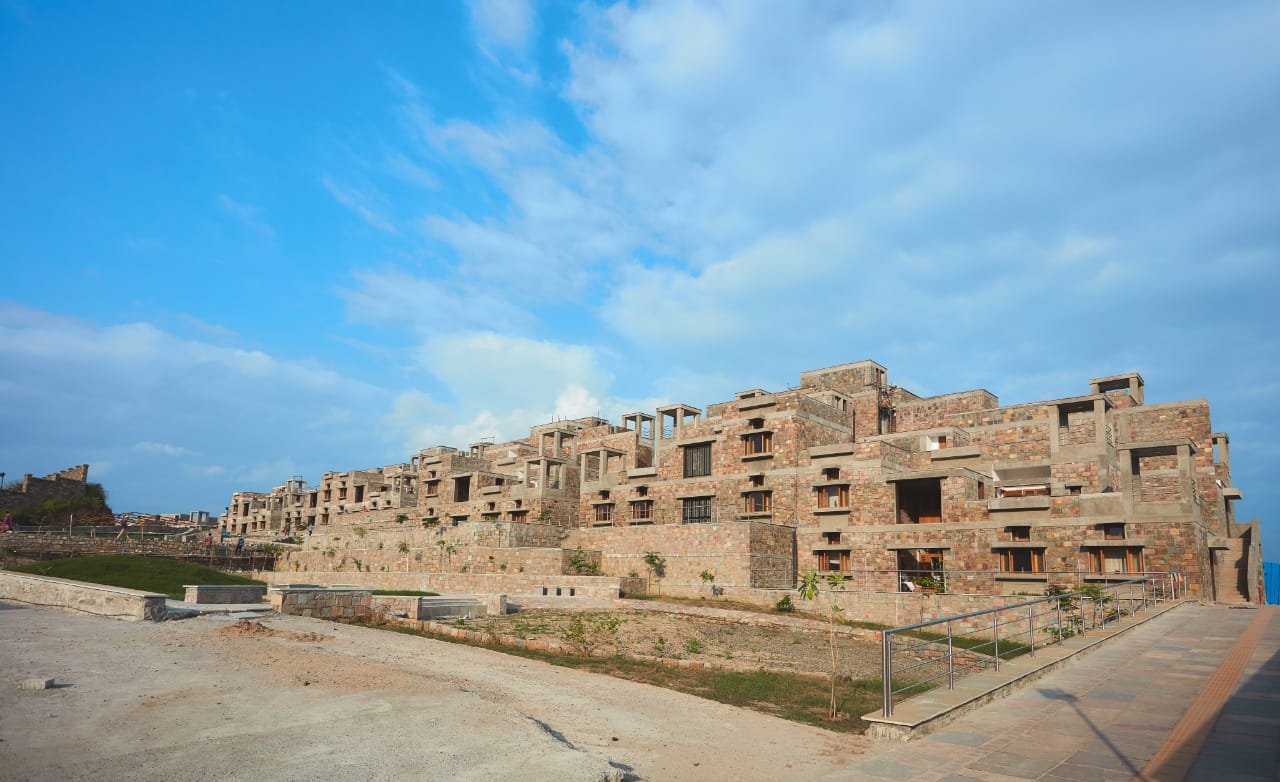
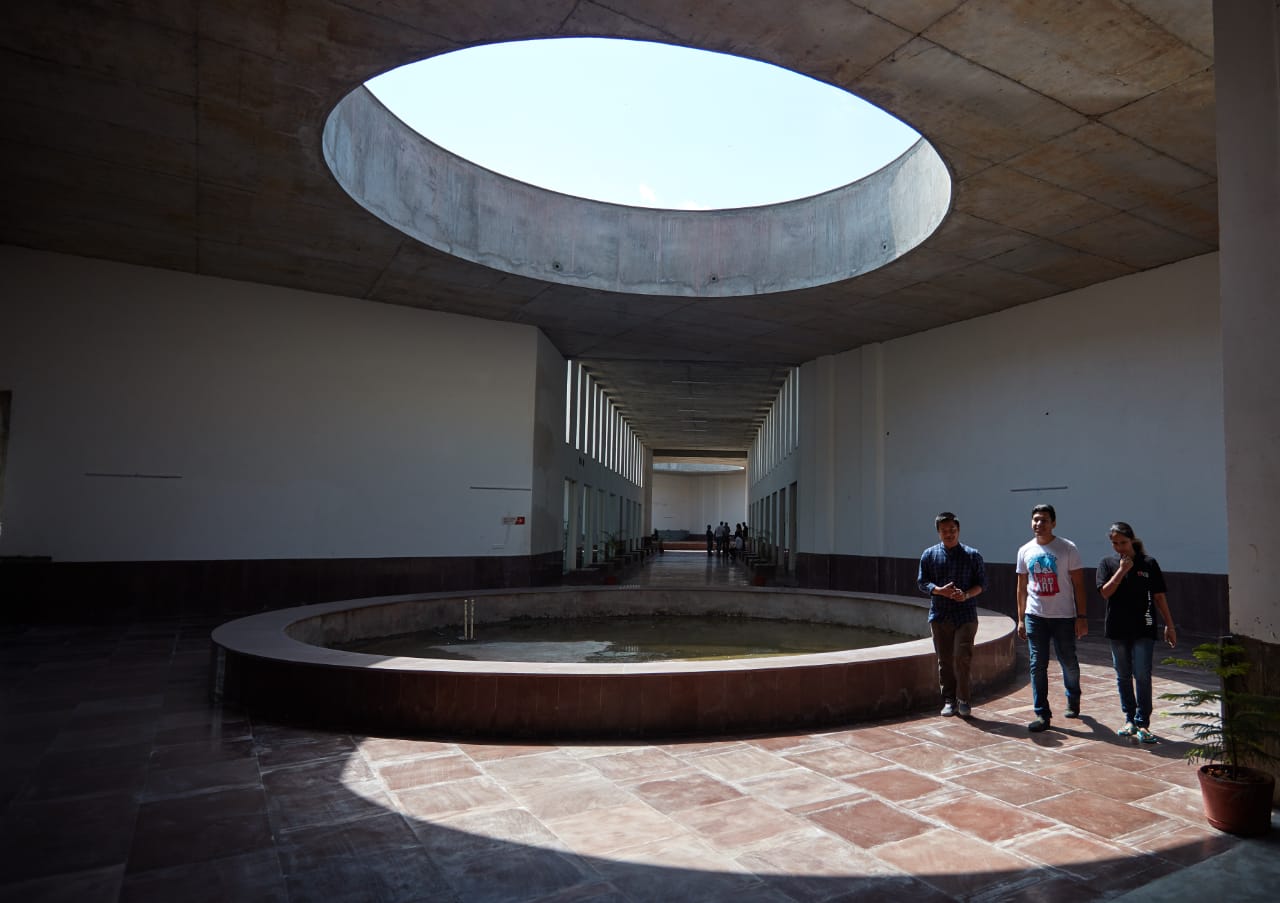
The classes on the first day began with Prof Archana Shukla (present Director of IIM L) taking the course on Behaviour in Organisations (BIO). The courses on financial, economics, operations, marketing and quantitative application in management were taught to ingrain the fundamentals of businesses alongside the courses such as principles of sustainability, sustainability reporting to maintain the balance between learning the fundamentals of business and adding to it the understanding of society and the environment. Apart from the several full-credit and half-credit courses on business sustainability, a lot of core courses too had case studies and modules owing to the application of sustainability-related concepts along with that subject’s concepts.

As the courses began running in full flow, I was inducted into one of the most talked about committees, of any MBA programme. I have also made some of my closest friends from this committee. The senior committee members were the fun lot who gave a lot of gyaan and inducted us well, after the official induction into the programme. Also, meeting a few seniors and batchmates who had chosen PGPSM over the regular PGP at IIM L gave a different perspective.

Image 5

In the first month of joining, the notification for Hindustan Unilever’s Lessons in Marketing Excellence (LIME) arrived and I asked my friends – Pankaj and Amogh – whether they would be interested to team up and we started working on the first assignment in no time. We were less hopeful as we didn’t know the fundamentals of Marketing back then and were only thinking from first principles. Luckily, we got selected for the campus finals for which we went to the main campus and had an amazing time meeting friends and prepping for the finals. After 2 rounds of presentations and a grilling Q&A, we were declared as the IIM Lucknow campus winners for LIME amidst the applause of the audience (largely PGP and PGP ABM batchmates). We were told that not only were we the first winners of such a reputed case competition from PGPSM but were also among the few 1st year teams to have won the campus rounds across colleges in the nine editions of LIME. Although we didn’t win the National finals, which was ably won by a friend’s team from IIM Indore, we had gained loads of confidence to propel us.

The summers went well for me, with me getting into a desirable role at one of the oldest philanthropic institutions in India (even before joining the course, I was targeting the organization and was lucky enough to get a convert). My batchmates too got through roles in consulting, finance, marketing, sustainability among others. It is also important to mention here that there were a few friends who somehow, despite their knowledge and preparation, had difficulty in converting several interviews and some also had to accept offers at stipends lesser than they deserved. After the summer placements, we went to the main campus to have a gala time during the fest (MV, as we know it). I participated in a competition organized by the Government of UP on Skill development and my team was declared as the national winner at the end of the rounds.

In the following term, the non-academic work was all about the final placements of my seniors’ batch which demanded a lot of hard work since it was the 2nd batch of PGPSM and we had a lot of ground to cover in terms of getting newer firms for recruitment. Once the placements got underway, I had some time at my disposal which I used to advise a standup comedian about his international go-to market strategy and also helped him strategise for creating a brand name out of his on-stage name. It was a fun experience and paid me handsomely too 😊.

The summer internship turned out to be 2 months of absolute revelations and learning and I also got a flavour of the government advisory landscape. This internship also gave me an opportunity to better value the courses I had been learning and also its application at the ground level. My project was about tribal education and hence the People part of the triple bottom line and its interlinkage with operations and human resource during my 2 months’ project brought me a clearer perspective on the relevance of my learning (doing a reality check helps!).

Once we returned from the summer internship, I had gotten myself a paid live project with one of the Big 3 (MBB) firm’s social initiative where I worked on their project operations. It was an amazing experience and I was working under the VP, Operations. Meanwhile, we went for a 2-week sojourn to Stockholm and Vaxjo in Sweden, Amsterdam and Maastricht in the Netherlands as a part of the course – international immersion.

Once the ongoing live project seemed to reach its fag end, I participated in, yet another competition launched by the Government of UP, this time on Tourism (Kumbh Mela), where again my team was adjudged the national winner.

Next was the summer internship for the junior batch which turned out to be better than the previous batches. The batch’s diligence and preparedness also helped wrap up the process fast. After the summers, I got engaged with a subscription-based micro-delivery service company in its product management team (with a decent stipend 😊). When I posted about this engagement on a social media platform, one senior pinged me asking me to send my updated CV as he had some potential opportunity for my profile in his firm. The process which took up from there went underway and I eventually managed to secure a job in the government advisory practice of a big-4 firm. During the last term of the course, I received a call from a very senior alum of IIM L who had called me to check whether I would be interested in joining his firm in a sustainability-centric role. I told him how I had accepted the previous offer and that I wouldn’t be able to join. My batchmates had secured roles in consulting to marketing to sales to operations and at better “numbers” than the preceding years. 

Was it as smooth as it could be? Hell, no!

There were several cases which needed the students to undergo situations which could be termed closer to being stressful –

  • Not an old course – The newness of the course as well as the smaller size of alums had its limitations with regards to recognition in the industry. However, with success in case competitions across colleges and across firms brought some recall value
  • Missing “dream roles”? – In case of placements too, a lot of the coveted roles did not open up for our batch and this caused stress for a lot of the talented and deserving students who probably had expected of those roles.
  • Trying hard to be positive – We also had quite a few naysayers too, people who had had dissonance within months of joining and more so after the course got midway. Of course, they would have come with their set of expectations which they couldn’t find matching and hence their realisation.
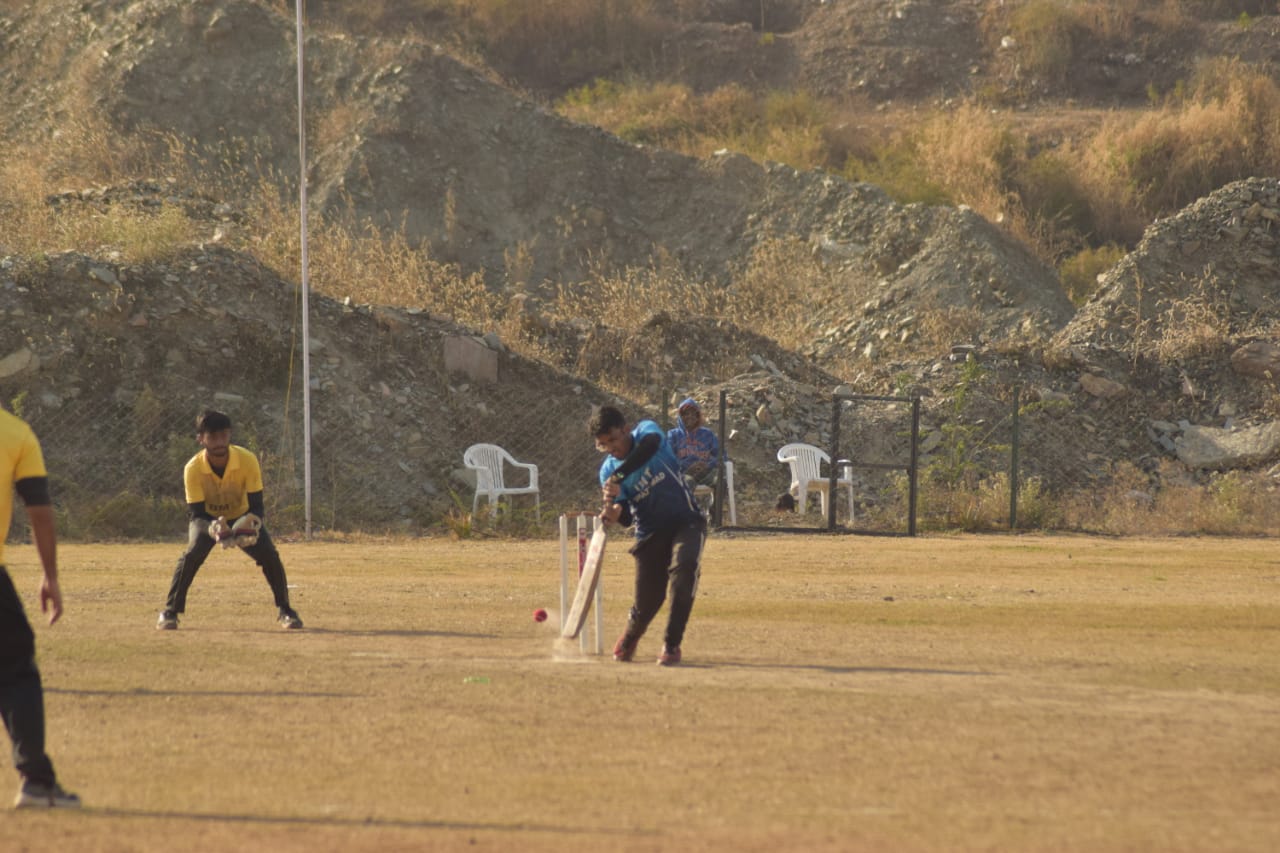
  • Missing junta – The times spent on the main campus did sometimes make students feel the need for staying with a larger number of like-minded students. However, the executive courses’ students’ presence helped in organizing parties and sports events (tournaments, ftw!)

I heard them and could easily identify several differences in their approach as well as in their expectations compared against mine.

Personally, my prioritization helped me minimize the occurrences of dissonance. In fact, as highlighted in the previous timeline, I tried to the best of my ability to make my decision work for me. In this endeavour, I tried to do several things which not only helped me earn accolades for myself, and in making some great friends from among batchmates and seniors of PGPSM, PGPM and PGPABM but also brought recognition to my programme among several other things.

Thus, this phase was spread across 6 trimesters where I did 3 corporate projects – with a standup comedian, with one of the Big 3 (MBB) firm’s social initiative and with a subscription-based micro-delivery service company – did several case studies, successfully completed one summer internship and won 3 case competitions (By the 2nd term, I had also set a target of doing either a competition or a project in each term). These initiatives I undertook apart from the summer internship – case competitions, live projects – got me richer in experience and also got me connected to several alums from all the courses of IIM L and thereby helped me build a network which has helped me in multiple ways during and after college too. Another aspect of the live projects was a constant reality check of my learning – be it for go-to market strategy, perception and consumer behavior towards sustainable packing for the delivery service company and while designing the operations’ guide.

Academically too, I did reasonably well and managed to secure straight As in Organisational Behaviour, Consumer Behaviour, Strategy Management, Services Marketing, Research methods, Sustainability reporting and 3 other courses.


Post PGPSM – looking back

After graduating, I joined the firm which I had converted, and I was deployed in Guwahati where I started working with government departments and have been working for the past 1 year 1 month.

In the past one year, I have got the opportunity to work in areas such as technology, human resource (training & capacity building), public procurement, project management, security & justice domain among others. Also, in the first 3 consecutive quarters after joining, I ended up receiving firm-level recognitions in each quarter. Furthermore, during these corona times, I also got the opportunity to work with the state government in bringing stranded people back to the state and also helping the state’s transformation and development think tank in devising strategies for the revival of some sectors of the economy in the post-Corona scenario.

Meanwhile, I read about an opportunity in a coveted GenMan programme in an IT giant, which was open only for students from select B-schools. Looking at the competition in store and with a desire to test myself, I applied for the same and got shortlisted for its process. The processes – director’s GD, case study and rounds of interviews – went well and I also reached the final rounds of the selection process but unfortunately, the hiring went on hold due to Corona.

As I look at the programme as an alum, I have come to know from the placement reports that the “numbers” have increased, the number of new organisations which showed interest this year has also increased which shows that for the 4th batch of PGPSM, not only have the numbers improved, but also the variety of roles offered have improved by a considerable margin.

So all set? Dig deeper!


During Corona times – looking ahead

As I had already stated in the disclaimer and as is obvious from the post above, this article is an account of what all I did with what all resources (knowledge, time as well as opportunity) I had at my disposal. If I sounded didactic in anyway, I would urge you to not think so, because all of the above is my version of what I experienced at PGPSM and in no way a generic “2 years at PGPSM” sort of a write-up.

Some of the key points to ponder about the programme, as I see it today and some points which have been put up so nicely by Tony sir in his previous post are listed below for your consideration–

  • The students joining the course will need to work hard and will need to drive the proceedings; they will need to take active roles and keep looking for opportunities.
  • As already mentioned above, Noida campus had a setback in terms of the distance from the PGP and PGPABM batchmates but had an impeccable advantage in terms of the opportunities it brought in due to the proximity to Delhi-NCR.
  • The student joining should try and have a larger goal in sight before joining the course and then she/he should take the twists and turns as they come (during the 2 years). This setting of expectation would help the student stay focused even when the chips are down; So, the students should try and be clear, to the extent possible, on what their expectations from the course are before they join and they should also learn to separate their expectations from those of their peers. Furthermore, as they go through the 2 years, they should be able to re-posture based on the then existing reality.
  • If a student is passive, and she/he expects to be a passenger on the ship and who feels that she/he will be taken to a destination and who are only bothered about reaching there — their placement, their CTC, their dream firm — then they are better off not joining PGPSM, and, if possible, they should rather join an established private school that will give them a decent placement.
  • The aforementioned point makes all the more sense amidst Corona, because in the present scenario, it is being estimated in some analysis that the demand for manpower may reduce in organisations and hence the possibility of a dream placement may take back seat. Hence, in this situation, it will be most advisable to take up the converts which are “more secure” on the placement front, because the return on investment factor will keep playing on the minds till the end of the course. I could also stretch the argument to bring in the risk vs reward relationship, but that will be farfetched.
  • Sustainability related roles may strong appear as cost pockets in these times and, if I may say so, not all the firms would want to be stewards to undertake initiatives pertaining to sustainability (amidst these times of cash crunch). However, I would love to believe that by the time the 2020-2022 batch gets placed, the economic situations would get better and I also hope that the present pandemic would give a thrust to the environment-related considerations of the organisations.

May you identify your personality type, and your drivers so that you are able to make the best decision for yourself in the present situation.

I would leave you with this interesting set of videos uploaded by Simon Sinek on his book ‘The Infinite Game’ –

All the best!

Sachin

How to choose between an HR program and a regular MBA

I think I have said this in another post — India is probably the only country where people will be willing to shell out more than 20 lakhs for a product and at the same time be willing to accept whatever variant the seller decides to give them. What am I referring to here? When I ask students who have both BM and HR calls from XLRI, what their preference is, or what they would prefer between XL-HR/TISS and IIM-K/MDI, most are very clear — the specialization does not matter, all that matters is the brand; others start bringing ROI into the picture.

I feel people put in more thought when choosing between a diesel and a petrol car! We are so crazy after elite institutions that we fail to even consider whether we will succeed/fail in or like/dislike a particular field. The objective of this post will be to give you enough information to choose the right program when faced with a choice between a premier HR program and other programs.

Read More

My MBA Journey: IIM-Visakhapatnam

The post on the new and baby IIMs last year was meant to be a sort of reality check for aspirants who have to choose between these schools and others. My intention was not to dissuade anyone from joining but to help them make the right choice when faced with a list of schools to choose from.

An alum of IIM-Visakhapatnam and still a regular reader of this blog, Abhishek, commented that the new and baby IIMs were not as bad as the post made them out to be. We got talking and it turns out that since since I had only mentioned established private schools — with schools such as NMIMS and SIBM in mind — it was construed to mean a much longer list, including schools that I would never bring into the comparison.

But all is well that ends well and Abhishek has written a piece about his MBA experience from IIM-V

And yeah, I will vouch for Vizag (the shorter and more used name), the city I was born and raised in — it has a certain charm to say the least and many great vantage points to take in the sea. It is a different story though that by the time I turned 20 I was eager to leave Vizag and go to the bigger cities, the biggest of cities, I felt Vizag was too slow for me, I kept saying it was for retired people :-). Ironically, once my parents retired, they left Vizag and moved to their hometown. So now, the only reasons to go back are a friend and that sea.


When you go to a restaurant you don’t expect much from and the ambience and food turn out to be top class, you’re happier than getting the same treatment at a 5 star restaurant. Because you hadn’t asked for it. 

To someone who had converted and rejected colleges like XIMB, IRMA for three consecutive years (from 2013 to 2015), IIM Visakhapatnam did something similar and I would always be grateful for that. Coming from a commerce background and not opting for a CA, an MBA was always at the back of my mind. Yes, this is the story of someone who was sure of doing an MBA right after his 12th exams. The only question was when and from where.

My tryst with CAT had started back in the year 2012 when I was only in the final year at St. Xavier’s College, Calcutta (arguably the second best Commerce College in the country). It was always the next logical step after a BBA in Marketing. In fact, I had even taken admission at a premium college right after my undergrad (XIMB). Had I not opted out after 21 days of lovely stay, I would have already passed out by 2015 which later happened to be the year I last wrote the CAT.

It was my love for marketing that made me opt out of XIMB. I had converted the HRM course. I virtually went on to work for a renowned E-Commerce company- Groupon in a Category Management role with folks from premiere B Schools like IMT Ghaziabad, IMI Delhi, FORE working in the same role as mine. I was lucky to have bagged such a role and worked there till 2016. When I converted IIM Visakhapatnam in 2016 which was being mentored by IIM Bangalore, I thought it was time.

The main reason was – the summer placements were supposed to happen simultaneously with IIM Bangalore, and I was sure I would crack something good as I had a very rare ‘relevant’ profile coming to my IIM Batch.

When I stepped foot into IIM Visakhapatnam, I was pleasantly surprised. I will not tell you why but infact show you why. Here are a few sceneries which greeted me when I entered the hostel of IIM Visakhapatnam.

I know, I know- this ain’t a hotel room. This is, in fact, a picture of one of the rooms of IIM Visakhapatnam. Our hostel is in the beach road and this is a normal view once you wake up. It took some time to sink in that I had come here to study and not chill.

Well, for the sincere folks, the classrooms were not bad either, as they were the exact replica of the classrooms of our mentor institute: IIM Bangalore.

When the committee selections started, I chose to and got successful in joining the Placement Committee. I was part of the Placement Committee for both the years. Since I was instrumental in closing the successful final placements of the first two batches of IIM Visakhapatnam, I will share a few special things about the placement process of my college that helped us in becoming the second new IIM after IIM Rohtak to complete its final placement process for the batch of 2018 on 12th March 2018.

IIM Visakhapatnam had immense support from IIM Bangalore for the initial few batches. The first phase of the summer placement process was held at IIM Bangalore in a first of a kind ‘pooled summer placement process’ for the first three batches. Due to this, a lot of students were able to intern at companies which recruit from IIM Bangalore. Few examples are Directi, Cloudtail. If you have a network in the corporate arena, you would come to know that these companies fetch you a 6 figure monthly stipend during the summer internship itself. I found myself to be lucky to have interned at Cloudtail in a ‘once in a lifetime project’ alongside colleagues from IIM Ahmedabad, Bangalore, Calcutta, XLRI, FMS. My project was to devise a discounting model for the Amazon Pantry category before the Great Indian Sale on Amazon. Trust me, this internship itself is a great talking point in most of my job interviews.

Few of these students were able to perform exceedingly well, perhaps at par with their colleagues from IIM ABC. This helped the students bag PPOs which virtually led to some of these companies becoming loyal recruiters at IIM Visakhapatnam. The profiles that these companies were offering were the same that they would have offered at IIM Bangalore. For instance, Bosch offers the prestigious Junior Managers’ Program. If you do an ordinary Linkedin search, you would come to know that the role is only offered at select premiere campuses like IIM Bangalore, IIM Calcutta, IIFT Delhi, IIM Kozhikode. The role involves an international stint to Germany.

Since the first two batches were taught predominantly by IIM Bangalore professors, the students had access to vast knowledge and experience from them. Hence they were able to fare tremendously in the interviews for these companies.

The batch size was only 50 for the first two years; once you take note of the above factors , you would realise that placing the students at profiles of their choice wasn’t a headache. As a result, we concluded our final placements on 12 March 2018, much before some of our new and so called baby IIM peers.

Oh, I forgot to mention. We have something called a BPIM which is a course that you take abroad. The entire batch takes this course unlike the student exchange which is opted by only a few. I travelled to Dubai with 30 of my peers and it was an amazing experience. Few others went to China.

Coming to 2020, the institute has only galloped in terms of improvement. I know people say the initial few batches shape an IIM, but for me the opposite still holds true. IIM Visakhapatnam, I am glad you accepted me and gave me things I will cherish for a lifetime.

Abhishek

My MBA Journey: IIM-Udaipur

Give the number of queries I get about the new and the baby IIMs, I thought the best way to shed a bit more light on them is to get my students who have gone there to write about their experience.

This one is by Siddharth, who is not a student, but was part of the IMS Team in Kochi. I met him whenever I went down there to take a session, which was usually once a year. Siddharth graduated recently from IIM-U and this is his take about the same.

Some of the parts were new to me as well, especially the part about why he chose IIM-U —  I think knowing why you want something, being clear about it, and not trying to invent ten other reasons apart from the sole reason is not a common trait (a great lesson in no FOMO)

So here are his two cents on this experience at IIM-U.


MBA was a kind of an escape plan for me back in 2017. But it turned out to be the best decision I’ve taken so far in my life. I understand that MBA aspirants who are reading this might already be bored or tired of reading such articles to get an idea about IIM. So, I promise that I won’t keep it long.

I completed my Mechanical Engineering in 2015 from a Government College (Trichur) in Kerala. My not-so-awesome CGPA, coupled with my high salary aspirations, made it impossible for me to get a campus placement. At that time, I was immature enough to prioritize salary as a deciding factor of my career, because I was of the blind assumption that I could do anything if I’m given excellent compensation, which is obviously not true. Also, I developed a sense that I’m not going to succeed much in a technical field. So, MBA was my way out to a high salary and a means of career route diversion.

So, I wrote CAT and a couple of other exams, got shortlisted for new IIMs, IIM Kozhikode, and IIM Indore. I converted IIM Udaipur, IIM Trichy, and IIFT Kolkata. I was not interested in a specialized International Business program at IIFT Kolkata. Also, there were many stories about discrimination of candidates between IIFT Kolkata and IIFT Delhi during placements (I genuinely don’t know whether it is true or not). However, the primary reason for not choosing IIFT Kolkata is something different, about which I will talk a few paragraphs later.

The following were the reasons for me to choose IIM Udaipur over IIM Trichy, even being from South

  1. Both campuses were equally good when it comes to curriculum, placements, pedagogy, permanent and visiting faculties, basic infrastructure, entrepreneurship support, fee structure etc. So, there was nothing much to compare on these lines
  2. I could find that the growth of IIM Udaipur is significantly steeper compared to other New IIMs. This was basically attributed to the vision of the Director Janat Shah, who is considered as a great visionary in these matters. So I had a belief that IIM Udaipur will surpass even IIM Kozhikode and IIM Indore in a very short span of time. So I consider being an alumnus of IIM Udaipur comparatively advantageous. Whoever joined IIM Kozhikode in 2004 might have had the same dilemma that I had in 2018. However, if I look at someone who graduated from IIM Kozhikode in 2006, it doesn’t make any difference to me whether he/she graduated in 2006 or later. What matters to me is that he/she is from IIM Kozhikode. Because we know IIM Kozhikode is great. Likewise, I could see such a growth trajectory for IIM Udaipur, and I was not wrong, I could witness that growth during my 2 years at IIM Udaipur. IIMU got listed in FT Ranking, which previously included only IIMA, IIMB, and IIMC. Likewise, IIMU is the youngest B-School to get AACSB Accreditation (received by only 5 percent of the world’s B-schools), just the fourth IIM to gain this accreditation, entering the ranks of IIM Ahmedabad, Bangalore, and Calcutta. Other details of ranking and accreditations are available on the website (like QS ranking, NIRF ranking etc.); I am skipping it for the benefit of word limit.
  3. IIM Udaipur has one of the best campuses in India. IIMU is the first of the new IIMs to move to its permanent campus, and spread over 300 acres of land. Few areas of the campus are under construction (which is in no way affecting the day to day life of a student) like artificial lakes, additional hostel blocks, landscaping etc. The magnificent site is characterized by sharp slopes and deep valleys. The institute is located in the Aravalli ranges, which adds to its scenic beauty. I open my hostel room window to beautiful hill ranges (not everyone has that fortune because I was lucky enough to get a mountain facing room)
  4. I’m from Kerala, and I wanted to have some exposure from North India. This is not a significant criterion for decision-making, however, most of my decisions are based on what makes me feel good. I go by what my heart says, and that’s not always good, but that makes me always happy and fills the gap for any possible regrets. And that’s why I didn’t go to IIFT Kolkata because I had an unreasonable and petty obsession for an IIM tag. And I’m not ashamed of telling that aloud. Yes, I was obsessed and stubborn. Else, I would have regretted a few years later, and my brain will keep on telling me, “Sid, you should have gone to IIM.” Now I’ve happily satisfied my obsession and ego. Yeah, satisfying our ego is a good feeling.

I was not vouching for IIMU here. I just put down my thought process, which will be definitely different for each one of you who read it.


My 2 years at IIM Udaipur

It started with meeting new friends, cliché discussions like “which other campuses did you convert?”, “are you a fresher?”, and if the answer is no, “where did you work?” etc etc etc. First-year hostel rooms are double occupancy, and my roommate was an IITian, who later turned out to be one of my very best friends. I still remember my mother being happy, thinking that I will become a studious guy because my roommate is an IITian. But I never became so much pulled into studies, and that’s something I did wrong. MBA is not like B.Tech. You can’t just take it for granted.

Then came committee elections, which started with the Placement Committee. 10 rounds of selection process, including a soapbox wherein the batch will elect 10 students to the Placement Committee. I was one of these 10 and that’s something that changed my path of life at IIM Udaipur for the next two years

IIM Udaipur follows a trimester system where there are 3 trimesters in the first year followed by two months of Summer Internship and again 3 trimesters of second year. The first trimester was really hectic because it takes you immediately out of your comfort zone. Towards the end of first trimester, we had the Summer Internship selection process.

More than half of the batch would get placed in the first 3 days, and the remaining half would be placed during the second trimester. Everyone will be placed for sure. Placement Committee has to ensure that because Summer internship is an academic requirement.

The second trimester was comparatively okay, because we got used to this hectic schedule. In the third trimester we had a Rural Immersion program wherein we had to stay in a village for one week and do a project in collaboration with an NGO. That was a different and exciting experience. After the third trimester we moved to respective cities to complete our Summer Internship. I was in Mumbai for one month and in Bangalore for the second month.

I had taken specialization in Analytics coupled with few subjects in Marketing and Finance for my second year. (when you don’t have a specific goal, put your feet everywhere :P, just kidding, don’t do that. I had my reasons :P). We met some of the most eminent faculties coming from IIM Bangalore, IIM Ahmedabad, XLRI etc. There was one professor who taught us Financial Derivatives, Prof. Uday Damodaran, one of the best teachers I ever had in my life. I heavily regret that I missed most of his magnificent lectures. There were few other professors who have influenced my thought process heavily. Prof. Pranthosh Banerjee from IIMA who taught Marketing and Marketing Analytics, Prof. Janat Shah, our eminent Director who also taught us Operations Management and Sunil Unni Guptan who is a wizard when it comes to honing your leadership skills and improving your communication.


Talking about the Placements, IIM Udaipur excels in all major domains especially Analytics, Sales & Marketing, Finance, Supply Chain Management etc. The major companies that visited the campus for Summer Placement include Goldman Sachs, Aditya Birla Capital, General Electric, Pidilite Industries, GSK Pharma, E&Y, Microland, MakeMyTrip, Reserve Bank of India, KPMG, United Breweries, Yes Bank and other reputable firms. Talking about Final Placements, the major companies include Amazon, Bain Capability Centre, Flipkart, Accenture Strategy, Bajaj Auto, AB InBev, Deloitte, and others apart from the PPOs offered by most of the companies that recruited for Summer Placements. The batch comprised of students from diverse academic as well as professional backgrounds with an average work experience of close to 27 months. There were students from IT, Manufacturing, Banking, Consulting, Teaching, Retail and other domains. In my batch, 30% of the pool comprised of candidates without prior work experience.

While I was teaching at IMS Learning Resources Pvt Ltd, I have come across many MBA aspirants who were very doubtful about the career prospectus if they join a B-School without prior work experience. To all those aspirants who has that insecurity, please be assured that a 2-year MBA program works well for both experienced candidates as well as freshers. It all depends on the requirements of the corporate participating in the Placement Process. Some of them need people with prior experience, majorly because the kind of job profile demands some pre-MBA professional experience. Some other corporates require freshers, because the nature of the job profile might not require prior experience. Both these groups mentioned above will train these new recruits after their induction because each organization has a specific work culture. So, whether you are a fresher or an experienced person, you will undergo training before you actually start executing the tasks outlined in your Job Description. So, bottom-line, freshers out there, please don’t think too much. Immerse yourself, expand your skills during the 2 years and start your career with an MBA degree. And I can tell you all; there is a significant advantage in starting your career as early as possible.

For a matter of fact, I shall give you two examples from my batch. One person had 2 years of experience in E&Y and then got placed in Accenture Strategy. Another person was a fresher who got a PPO from Pidilite Industries Ltd. One has the advantage of experience, and the other has the advantage of time. I prefer the advantage of time.

As IIM Udaipur offers General Management program, it allows students to explore their chances in all the domains and choose what fits you the best. We have a Placement Preparation Cell which provides all the support to the candidates in terms of technical as well as soft skills and eventually make them industry ready and ace the placement processes.

Adding to it, I have seen my batchmates who could entirely change their domain perfectly. There is a friend of mine who had prior experience in Operations and then shifted to Education industry, wherein I had experience in teaching and changed to Analytics industry. Another friend moved from Operations to SAP consulting, wherein another friend had his dream domain of Finance from Analytics (and eventually he will try to find some corner in Financial Analytics)


I started writing this with the promise that I won’t make it long. I forgot to tell you that I rarely keep my promises. Don’t worry; I’m kidding. I will just summarize everything, all my takeaways, in next few bullet points.

  1. If you are in a comfort zone, you will definitely come out of it after an MBA. Also, you’ll be ready for any challenge. Please don’t consider this as a cliché dialogue. Once you do it, you will understand it. As our Director always say, “this is a transformational journey”
  2. You will make a lot of good friends and many relationships that will stay longer. There will be hiccups, but that’s okay, it’s all a part of life. As the saying goes, whatever doesn’t kill you makes you harder. I believe in Murphy’s law
  3. You will meet people from different geography, professional backgrounds etc, and that is all about diversity. You will be mingling with multiple people with different thought processes. Your thought process will transform after getting exposed to the lectures from those eminent professors who come with years of academic as well as industrial experience. That will help you to analyze everything from a different angle. Even during lectures, we engage in analyzing a particular matter from multiple angles and perspectives, which is absolutely crucial when it comes to managing a business and stakeholders. That’s why everybody says that peer learning and diversity are key takeaways from an MBA and that’s absolutely true

Each one of us has different reasons to do an MBA. Whatever you decide, make sure that you don’t completely go by your brain and rational thought process. Sometimes it’s okay to listen to your heart, although it’s a personal choice.

All the best.

Sid.

PHOTO-2020-06-16-01-45-00PHOTO-2020-06-16-01-44-56 2PHOTO-2020-06-16-01-45-01

PHOTO-2020-06-16-01-45-01 3PHOTO-2020-06-16-01-45-02

IIMs versus FMS, XL, MDI and other top schools

Now that the first round results of almost all the b-schools are out, we get regular queries about which b-schools to join. There is rarely any confusion about A, B, and C but after that, it seems as if aspirants are having a lot of trouble choosing between the IIMs L, I, and K and other top b-schools such as FMS, XLRI, MDI, and others. How does one go about making the right choice between the IIMs and other top schools? One of the terms thrown around a lot these days is ROI. Read More

My MBA Journey: IIM-Visakhapatnam

The post on the new and baby IIMs was meant to be a sort of reality check for aspirants who have to choose between these schools and others. My intention was not to dissuade anyone from joining but to help them make the right choice when faced with a list of schools to choose from.

An alum of IIM-Visakhapatnam and still a regular reader of this blog, Abhishek, commented that the new and baby IIMs were not as bad as the post made them out to be. We got talking and it turns out that since since I had only mentioned established private schools — with schools such as NMIMS and SIBM in mind — it was construed to mean a much longer list.

But all is well that ends well and Abhishek has written a piece about his MBA experience from IIM-V

And yeah, I will vouch for Vizag (the shorter and more used name), the city I was born and raised in — it has a certain charm to say the least and many great vantage points to take in the sea. It is a different story though that by the time I turned 20 I was eager to leave Vizag and go to the bigger cities, the biggest of cities, I felt Vizag was too slow for me, I kept saying it was for retired people :-). Ironically, once my parents retired, they left Vizag and moved to their hometown. So now, the only reasons to go back are a friend and that sea.


When you go to a restaurant you don’t expect much from and the ambience and food turn out to be top class, you’re happier than getting the same treatment at a 5 star restaurant. Because you hadn’t asked for it. 

To someone who had converted and rejected colleges like XIMB, IRMA for three consecutive years (from 2013 to 2015), IIM Visakhapatnam did something similar and I would always be grateful for that. Coming from a commerce background and not opting for a CA, an MBA was always at the back of my mind. Yes, this is the story of someone who was sure of doing an MBA right after his 12th exams. The only question was when and from where.

My tryst with CAT had started back in the year 2012 when I was only in the final year at St. Xavier’s College, Calcutta (arguably the second best Commerce College in the country). It was always the next logical step after a BBA in Marketing. In fact, I had even taken admission at a premium college right after my undergrad (XIMB). Had I not opted out after 21 days of lovely stay, I would have already passed out by 2015 which later happened to be the year I last wrote the CAT.

It was my love for marketing that made me opt out of XIMB. I had converted the HRM course. I virtually went on to work for a renowned E-Commerce company- Groupon in a Category Management role with folks from premiere B Schools like IMT Ghaziabad, IMI Delhi, FORE working in the same role as mine. I was lucky to have bagged such a role and worked there till 2016. When I converted IIM Visakhapatnam in 2016 which was being mentored by IIM Bangalore, I thought it was time.

The main reason was – the summer placements were supposed to happen simultaneously with IIM Bangalore, and I was sure I would crack something good as I had a very rare ‘relevant’ profile coming to my IIM Batch.

When I stepped foot into IIM Visakhapatnam, I was pleasantly surprised. I will not tell you why but infact show you why. Here are a few sceneries which greeted me when I entered the hostel of IIM Visakhapatnam.

I know, I know- this ain’t a hotel room. This is, in fact, a picture of one of the rooms of IIM Visakhapatnam. Our hostel is in the beach road and this is a normal view once you wake up. It took some time to sink in that I had come here to study and not chill.

Well, for the sincere folks, the classrooms were not bad either, as they were the exact replica of the classrooms of our mentor institute: IIM Bangalore.

When the committee selections started, I chose to and got successful in joining the Placement Committee. I was part of the Placement Committee for both the years. Since I was instrumental in closing the successful final placements of the first two batches of IIM Visakhapatnam, I will share a few special things about the placement process of my college that helped us in becoming the second new IIM after IIM Rohtak to complete its final placement process for the batch of 2018 on 12th March 2018.

IIM Visakhapatnam had immense support from IIM Bangalore for the initial few batches. The first phase of the summer placement process was held at IIM Bangalore in a first of a kind ‘pooled summer placement process’ for the first three batches. Due to this, a lot of students were able to intern at companies which recruit from IIM Bangalore. Few examples are Directi, Cloudtail. If you have a network in the corporate arena, you would come to know that these companies fetch you a 6 figure monthly stipend during the summer internship itself. I found myself to be lucky to have interned at Cloudtail in a ‘once in a lifetime project’ alongside colleagues from IIM Ahmedabad, Bangalore, Calcutta, XLRI, FMS. My project was to devise a discounting model for the Amazon Pantry category before the Great Indian Sale on Amazon. Trust me, this internship itself is a great talking point in most of my job interviews.

Few of these students were able to perform exceedingly well, perhaps at par with their colleagues from IIM ABC. This helped the students bag PPOs which virtually led to some of these companies becoming loyal recruiters at IIM Visakhapatnam. The profiles that these companies were offering were the same that they would have offered at IIM Bangalore. For instance, Bosch offers the prestigious Junior Managers’ Program. If you do an ordinary Linkedin search, you would come to know that the role is only offered at select premiere campuses like IIM Bangalore, IIM Calcutta, IIFT Delhi, IIM Kozhikode. The role involves an international stint to Germany.

Since the first two batches were taught predominantly by IIM Bangalore professors, the students had access to vast knowledge and experience from them. Hence they were able to fare tremendously in the interviews for these companies.

The batch size was only 50 for the first two years; once you take note of the above factors , you would realise that placing the students at profiles of their choice wasn’t a headache. As a result, we concluded our final placements on 12 March 2018, much before some of our new and so called baby IIM peers.

Oh, I forgot to mention. We have something called a BPIM which is a course that you take abroad. The entire batch takes this course unlike the student exchange which is opted by only a few. I travelled to Dubai with 30 of my peers and it was an amazing experience. Few others went to China.

Coming to 2020, the institute has only galloped in terms of improvement. I know people say the initial few batches shape an IIM, but for me the opposite still holds true. IIM Visakhapatnam, I am glad you accepted me and gave me things I will cherish for a lifetime.

Abhishek

CAT Preparation: Changing The Default Settings

Every year a lot of aspirants toil away at this thing called CAT preparation. The most sincere and determined ones, come in full of energy and enthusiasm to do whatever it takes to ace this test and get into the hallowed portals of an IIM.

But do they come in with a blank mind ready to understand what this test is all about and attune themselves to it? The answer as we all know is, NO.

A CAT aspirant beginning his prep will be at the very least 20 years old, long enough to start the test with a sizeable psychological baggage — a mental make up that stems from one’s experiences and successes with education & tests throughout school & college. Read More

How to and not to evaluate your first SIMCAT performance

The response to the first SIMCAT was great and it was nice to see so many students jump into the fray from the word go. But the plunge as most of you would know is similar to jumping off a diving board for the first time — the moment of impact, the bewilderment when you are under the water, and most importantly the desperation towards the end to somehow get back to the ground again. (I have never jumped off a diving board but was once caught under the waves on the beach when I was quite little, thankfully my dad managed to rescue me).

Just like you would not bother too much about the score given to your first ever dive, do not think too much about the score you got. This is neither an engineering exam nor a blood test. So what is it and how should you evaluate your performance?

Read More