Give the number of queries I get about the new and the baby IIMs, I thought the best way to shed a bit more light on them is to get my students who have gone there to write about their experience.
This one is by Siddharth, who is not a student, but was part of the IMS Team in Kochi. I met him whenever I went down there to take a session, which was usually once a year. Siddharth graduated recently from IIM-U and this is his take about the same.
Some of the parts were new to me as well, especially the part about why he chose IIM-U — I think knowing why you want something, being clear about it, and not trying to invent ten other reasons apart from the sole reason is not a common trait (a great lesson in no FOMO)
So here are his two cents on this experience at IIM-U.
MBA was a kind of an escape plan for me back in 2017. But it turned out to be the best decision I’ve taken so far in my life. I understand that MBA aspirants who are reading this might already be bored or tired of reading such articles to get an idea about IIM. So, I promise that I won’t keep it long.
I completed my Mechanical Engineering in 2015 from a Government College (Trichur) in Kerala. My not-so-awesome CGPA, coupled with my high salary aspirations, made it impossible for me to get a campus placement. At that time, I was immature enough to prioritize salary as a deciding factor of my career, because I was of the blind assumption that I could do anything if I’m given excellent compensation, which is obviously not true. Also, I developed a sense that I’m not going to succeed much in a technical field. So, MBA was my way out to a high salary and a means of career route diversion.
So, I wrote CAT and a couple of other exams, got shortlisted for new IIMs, IIM Kozhikode, and IIM Indore. I converted IIM Udaipur, IIM Trichy, and IIFT Kolkata. I was not interested in a specialized International Business program at IIFT Kolkata. Also, there were many stories about discrimination of candidates between IIFT Kolkata and IIFT Delhi during placements (I genuinely don’t know whether it is true or not). However, the primary reason for not choosing IIFT Kolkata is something different, about which I will talk a few paragraphs later.
The following were the reasons for me to choose IIM Udaipur over IIM Trichy, even being from South
- Both campuses were equally good when it comes to curriculum, placements, pedagogy, permanent and visiting faculties, basic infrastructure, entrepreneurship support, fee structure etc. So, there was nothing much to compare on these lines
- I could find that the growth of IIM Udaipur is significantly steeper compared to other New IIMs. This was basically attributed to the vision of the Director Janat Shah, who is considered as a great visionary in these matters. So I had a belief that IIM Udaipur will surpass even IIM Kozhikode and IIM Indore in a very short span of time. So I consider being an alumnus of IIM Udaipur comparatively advantageous. Whoever joined IIM Kozhikode in 2004 might have had the same dilemma that I had in 2018. However, if I look at someone who graduated from IIM Kozhikode in 2006, it doesn’t make any difference to me whether he/she graduated in 2006 or later. What matters to me is that he/she is from IIM Kozhikode. Because we know IIM Kozhikode is great. Likewise, I could see such a growth trajectory for IIM Udaipur, and I was not wrong, I could witness that growth during my 2 years at IIM Udaipur. IIMU got listed in FT Ranking, which previously included only IIMA, IIMB, and IIMC. Likewise, IIMU is the youngest B-School to get AACSB Accreditation (received by only 5 percent of the world’s B-schools), just the fourth IIM to gain this accreditation, entering the ranks of IIM Ahmedabad, Bangalore, and Calcutta. Other details of ranking and accreditations are available on the website (like QS ranking, NIRF ranking etc.); I am skipping it for the benefit of word limit.
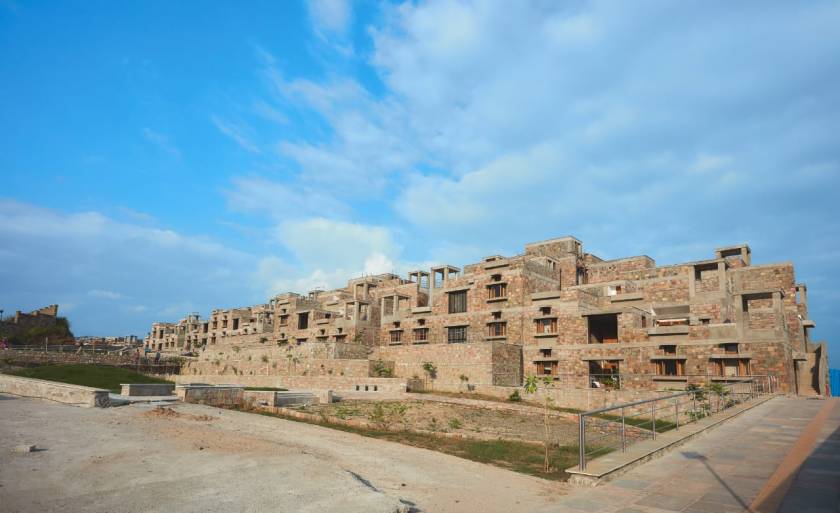
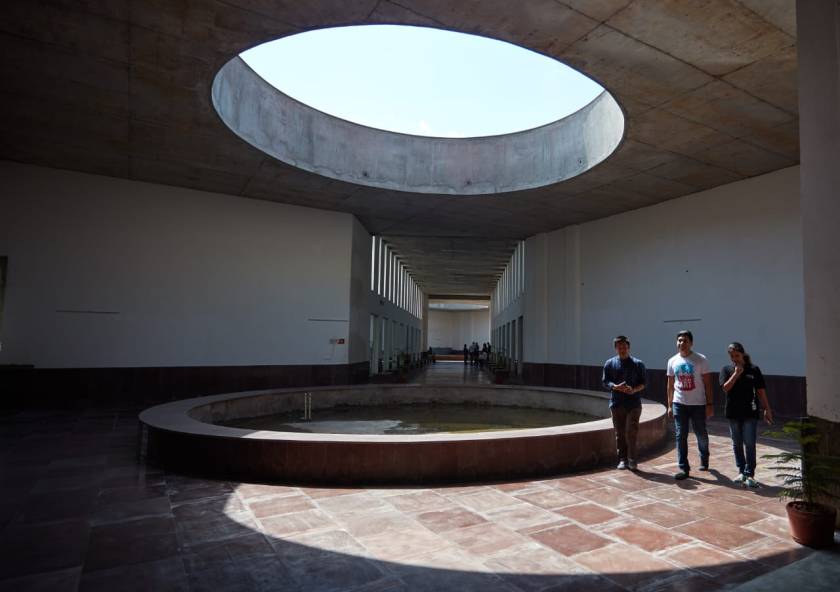
- IIM Udaipur has one of the best campuses in India. IIMU is the first of the new IIMs to move to its permanent campus, and spread over 300 acres of land. Few areas of the campus are under construction (which is in no way affecting the day to day life of a student) like artificial lakes, additional hostel blocks, landscaping etc. The magnificent site is characterized by sharp slopes and deep valleys. The institute is located in the Aravalli ranges, which adds to its scenic beauty. I open my hostel room window to beautiful hill ranges (not everyone has that fortune because I was lucky enough to get a mountain facing room)
- I’m from Kerala, and I wanted to have some exposure from North India. This is not a significant criterion for decision-making, however, most of my decisions are based on what makes me feel good. I go by what my heart says, and that’s not always good, but that makes me always happy and fills the gap for any possible regrets. And that’s why I didn’t go to IIFT Kolkata because I had an unreasonable and petty obsession for an IIM tag. And I’m not ashamed of telling that aloud. Yes, I was obsessed and stubborn. Else, I would have regretted a few years later, and my brain will keep on telling me, “Sid, you should have gone to IIM.” Now I’ve happily satisfied my obsession and ego. Yeah, satisfying our ego is a good feeling.
I was not vouching for IIMU here. I just put down my thought process, which will be definitely different for each one of you who read it.
My 2 years at IIM Udaipur
It started with meeting new friends, cliché discussions like “which other campuses did you convert?”, “are you a fresher?”, and if the answer is no, “where did you work?” etc etc etc. First-year hostel rooms are double occupancy, and my roommate was an IITian, who later turned out to be one of my very best friends. I still remember my mother being happy, thinking that I will become a studious guy because my roommate is an IITian. But I never became so much pulled into studies, and that’s something I did wrong. MBA is not like B.Tech. You can’t just take it for granted.
Then came committee elections, which started with the Placement Committee. 10 rounds of selection process, including a soapbox wherein the batch will elect 10 students to the Placement Committee. I was one of these 10 and that’s something that changed my path of life at IIM Udaipur for the next two years
IIM Udaipur follows a trimester system where there are 3 trimesters in the first year followed by two months of Summer Internship and again 3 trimesters of second year. The first trimester was really hectic because it takes you immediately out of your comfort zone. Towards the end of first trimester, we had the Summer Internship selection process.
More than half of the batch would get placed in the first 3 days, and the remaining half would be placed during the second trimester. Everyone will be placed for sure. Placement Committee has to ensure that because Summer internship is an academic requirement.
The second trimester was comparatively okay, because we got used to this hectic schedule. In the third trimester we had a Rural Immersion program wherein we had to stay in a village for one week and do a project in collaboration with an NGO. That was a different and exciting experience. After the third trimester we moved to respective cities to complete our Summer Internship. I was in Mumbai for one month and in Bangalore for the second month.
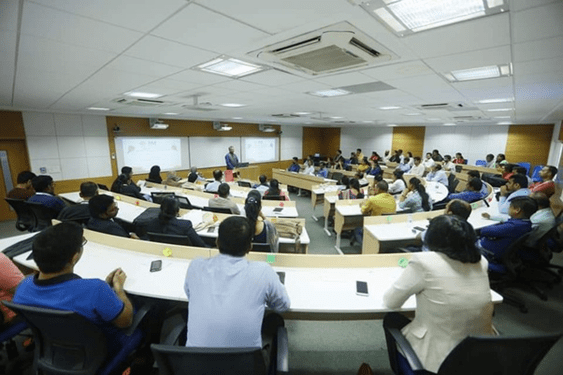
I had taken specialization in Analytics coupled with few subjects in Marketing and Finance for my second year. (when you don’t have a specific goal, put your feet everywhere :P, just kidding, don’t do that. I had my reasons :P). We met some of the most eminent faculties coming from IIM Bangalore, IIM Ahmedabad, XLRI etc. There was one professor who taught us Financial Derivatives, Prof. Uday Damodaran, one of the best teachers I ever had in my life. I heavily regret that I missed most of his magnificent lectures. There were few other professors who have influenced my thought process heavily. Prof. Pranthosh Banerjee from IIMA who taught Marketing and Marketing Analytics, Prof. Janat Shah, our eminent Director who also taught us Operations Management and Sunil Unni Guptan who is a wizard when it comes to honing your leadership skills and improving your communication.
Talking about the Placements, IIM Udaipur excels in all major domains especially Analytics, Sales & Marketing, Finance, Supply Chain Management etc. The major companies that visited the campus for Summer Placement include Goldman Sachs, Aditya Birla Capital, General Electric, Pidilite Industries, GSK Pharma, E&Y, Microland, MakeMyTrip, Reserve Bank of India, KPMG, United Breweries, Yes Bank and other reputable firms. Talking about Final Placements, the major companies include Amazon, Bain Capability Centre, Flipkart, Accenture Strategy, Bajaj Auto, AB InBev, Deloitte, and others apart from the PPOs offered by most of the companies that recruited for Summer Placements. The batch comprised of students from diverse academic as well as professional backgrounds with an average work experience of close to 27 months. There were students from IT, Manufacturing, Banking, Consulting, Teaching, Retail and other domains. In my batch, 30% of the pool comprised of candidates without prior work experience.
While I was teaching at IMS Learning Resources Pvt Ltd, I have come across many MBA aspirants who were very doubtful about the career prospectus if they join a B-School without prior work experience. To all those aspirants who has that insecurity, please be assured that a 2-year MBA program works well for both experienced candidates as well as freshers. It all depends on the requirements of the corporate participating in the Placement Process. Some of them need people with prior experience, majorly because the kind of job profile demands some pre-MBA professional experience. Some other corporates require freshers, because the nature of the job profile might not require prior experience. Both these groups mentioned above will train these new recruits after their induction because each organization has a specific work culture. So, whether you are a fresher or an experienced person, you will undergo training before you actually start executing the tasks outlined in your Job Description. So, bottom-line, freshers out there, please don’t think too much. Immerse yourself, expand your skills during the 2 years and start your career with an MBA degree. And I can tell you all; there is a significant advantage in starting your career as early as possible.
For a matter of fact, I shall give you two examples from my batch. One person had 2 years of experience in E&Y and then got placed in Accenture Strategy. Another person was a fresher who got a PPO from Pidilite Industries Ltd. One has the advantage of experience, and the other has the advantage of time. I prefer the advantage of time.
As IIM Udaipur offers General Management program, it allows students to explore their chances in all the domains and choose what fits you the best. We have a Placement Preparation Cell which provides all the support to the candidates in terms of technical as well as soft skills and eventually make them industry ready and ace the placement processes.
Adding to it, I have seen my batchmates who could entirely change their domain perfectly. There is a friend of mine who had prior experience in Operations and then shifted to Education industry, wherein I had experience in teaching and changed to Analytics industry. Another friend moved from Operations to SAP consulting, wherein another friend had his dream domain of Finance from Analytics (and eventually he will try to find some corner in Financial Analytics)
I started writing this with the promise that I won’t make it long. I forgot to tell you that I rarely keep my promises. Don’t worry; I’m kidding. I will just summarize everything, all my takeaways, in next few bullet points.
- If you are in a comfort zone, you will definitely come out of it after an MBA. Also, you’ll be ready for any challenge. Please don’t consider this as a cliché dialogue. Once you do it, you will understand it. As our Director always say, “this is a transformational journey”
- You will make a lot of good friends and many relationships that will stay longer. There will be hiccups, but that’s okay, it’s all a part of life. As the saying goes, whatever doesn’t kill you makes you harder. I believe in Murphy’s law
- You will meet people from different geography, professional backgrounds etc, and that is all about diversity. You will be mingling with multiple people with different thought processes. Your thought process will transform after getting exposed to the lectures from those eminent professors who come with years of academic as well as industrial experience. That will help you to analyze everything from a different angle. Even during lectures, we engage in analyzing a particular matter from multiple angles and perspectives, which is absolutely crucial when it comes to managing a business and stakeholders. That’s why everybody says that peer learning and diversity are key takeaways from an MBA and that’s absolutely true
Each one of us has different reasons to do an MBA. Whatever you decide, make sure that you don’t completely go by your brain and rational thought process. Sometimes it’s okay to listen to your heart, although it’s a personal choice.
All the best.
Sid.