In the previous two posts, we took a look at the first two building blocks to increase your score and percentile on CAT Quant — Accuracy & Question Selection. In this post, we will look at the third building block — Speed. Read More

In the previous two posts, we took a look at the first two building blocks to increase your score and percentile on CAT Quant — Accuracy & Question Selection. In this post, we will look at the third building block — Speed. Read More

Everything seems to have speeded up because of COVID, queries that I usually get as we draw nearer to the CAT — test-taking fear, stress, and anxiety — have now turned up in the comments section in early July itself.
Due to the pandemic, a lot of CAT-19 aspirants also seemed to have let go of admits into schools they would otherwise have joined. So all of these retakers have got back to the SimCATs 2020 with a vengeance and that is evident in the high scores in the first few Sims. And they are desperate to see their best scores at the earliest.
My personal take is that the notification of the CAT is still not out, we do not know when the test will be held this year. It might be delayed for all we know. And whatever be the case everyone is effectively condemned to a rat in a cage existence for the next three months at the least and that is being optimistic.
So what all of us need is to manage our bodies and minds for a longer haul — in terms of CAT date, easing of house-arrest, and ceasing of household chores.


In the first part of this post we covered the first building block to achieve higher scores and percentiles on CAT QA — accuracy. In this post, we will take up the next one — selection.
QA is the section that gets the maximum attention of test-takers of all stripes and there is always a litany of frustrations and queries that plague aspirants —
The answer to all of these questions lies in the way you select questions and the way you navigate between them.
Read More
Unlike the other two sections, QA is a section that has a direct link to what you have done in school and college. Most of the topics that are tested on the CAT have also been a part of the school curriculum. This I feel is the biggest roadblock in front of test-takers wanting to achieve higher scores on the CAT Quant because high Math scores during X and XII exams do not automatically imply doing well on CAT Quant.

A few years back, I attended the Chennai convocation function for aspirants who cleared the Company Secretary (CS) exam (a relative of mine had cleared the exam). The Chief Guest was Padmishri awardee T.N.Manoharan, who is a pre-eminent figure in the Banking and Accounting sector in the country with his book being a must-read for all CA aspirants. He was part of the government-appointed team that cleaned up the Satyam mess and paved the way for the transition to Tech Mahindra. His keynote address was leavened with wisdom and had too many punchlines for me to recount here but one of the things he said is spot on when it comes to the way we should deal with success and failure. He said… Read More

The post on the new and baby IIMs was meant to be a sort of reality check for aspirants who have to choose between these schools and others. My intention was not to dissuade anyone from joining but to help them make the right choice when faced with a list of schools to choose from.
An alum of IIM-Visakhapatnam and still a regular reader of this blog, Abhishek, commented that the new and baby IIMs were not as bad as the post made them out to be. We got talking and it turns out that since since I had only mentioned established private schools — with schools such as NMIMS and SIBM in mind — it was construed to mean a much longer list.
But all is well that ends well and Abhishek has written a piece about his MBA experience from IIM-V
And yeah, I will vouch for Vizag (the shorter and more used name), the city I was born and raised in — it has a certain charm to say the least and many great vantage points to take in the sea. It is a different story though that by the time I turned 20 I was eager to leave Vizag and go to the bigger cities, the biggest of cities, I felt Vizag was too slow for me, I kept saying it was for retired people :-). Ironically, once my parents retired, they left Vizag and moved to their hometown. So now, the only reasons to go back are a friend and that sea.
When you go to a restaurant you don’t expect much from and the ambience and food turn out to be top class, you’re happier than getting the same treatment at a 5 star restaurant. Because you hadn’t asked for it.
To someone who had converted and rejected colleges like XIMB, IRMA for three consecutive years (from 2013 to 2015), IIM Visakhapatnam did something similar and I would always be grateful for that. Coming from a commerce background and not opting for a CA, an MBA was always at the back of my mind. Yes, this is the story of someone who was sure of doing an MBA right after his 12th exams. The only question was when and from where.
My tryst with CAT had started back in the year 2012 when I was only in the final year at St. Xavier’s College, Calcutta (arguably the second best Commerce College in the country). It was always the next logical step after a BBA in Marketing. In fact, I had even taken admission at a premium college right after my undergrad (XIMB). Had I not opted out after 21 days of lovely stay, I would have already passed out by 2015 which later happened to be the year I last wrote the CAT.
It was my love for marketing that made me opt out of XIMB. I had converted the HRM course. I virtually went on to work for a renowned E-Commerce company- Groupon in a Category Management role with folks from premiere B Schools like IMT Ghaziabad, IMI Delhi, FORE working in the same role as mine. I was lucky to have bagged such a role and worked there till 2016. When I converted IIM Visakhapatnam in 2016 which was being mentored by IIM Bangalore, I thought it was time.
The main reason was – the summer placements were supposed to happen simultaneously with IIM Bangalore, and I was sure I would crack something good as I had a very rare ‘relevant’ profile coming to my IIM Batch.
When I stepped foot into IIM Visakhapatnam, I was pleasantly surprised. I will not tell you why but infact show you why. Here are a few sceneries which greeted me when I entered the hostel of IIM Visakhapatnam.

I know, I know- this ain’t a hotel room. This is, in fact, a picture of one of the rooms of IIM Visakhapatnam. Our hostel is in the beach road and this is a normal view once you wake up. It took some time to sink in that I had come here to study and not chill.
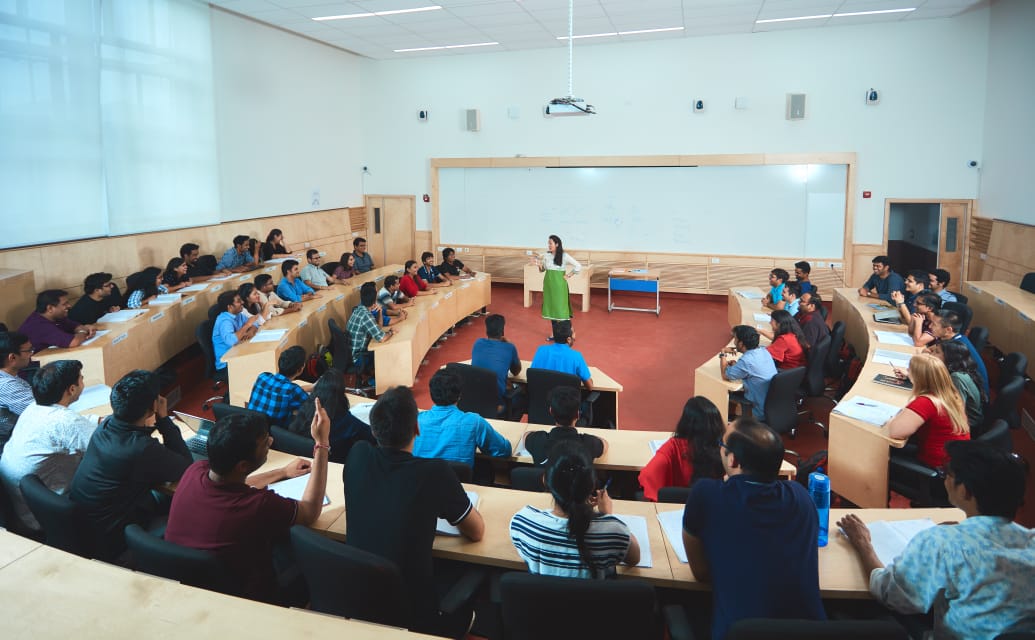
Well, for the sincere folks, the classrooms were not bad either, as they were the exact replica of the classrooms of our mentor institute: IIM Bangalore.
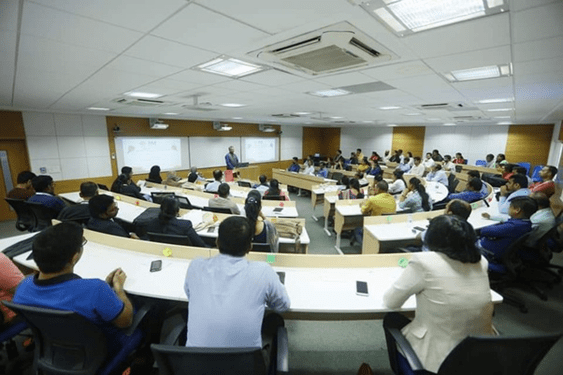
When the committee selections started, I chose to and got successful in joining the Placement Committee. I was part of the Placement Committee for both the years. Since I was instrumental in closing the successful final placements of the first two batches of IIM Visakhapatnam, I will share a few special things about the placement process of my college that helped us in becoming the second new IIM after IIM Rohtak to complete its final placement process for the batch of 2018 on 12th March 2018.
IIM Visakhapatnam had immense support from IIM Bangalore for the initial few batches. The first phase of the summer placement process was held at IIM Bangalore in a first of a kind ‘pooled summer placement process’ for the first three batches. Due to this, a lot of students were able to intern at companies which recruit from IIM Bangalore. Few examples are Directi, Cloudtail. If you have a network in the corporate arena, you would come to know that these companies fetch you a 6 figure monthly stipend during the summer internship itself. I found myself to be lucky to have interned at Cloudtail in a ‘once in a lifetime project’ alongside colleagues from IIM Ahmedabad, Bangalore, Calcutta, XLRI, FMS. My project was to devise a discounting model for the Amazon Pantry category before the Great Indian Sale on Amazon. Trust me, this internship itself is a great talking point in most of my job interviews.
Few of these students were able to perform exceedingly well, perhaps at par with their colleagues from IIM ABC. This helped the students bag PPOs which virtually led to some of these companies becoming loyal recruiters at IIM Visakhapatnam. The profiles that these companies were offering were the same that they would have offered at IIM Bangalore. For instance, Bosch offers the prestigious Junior Managers’ Program. If you do an ordinary Linkedin search, you would come to know that the role is only offered at select premiere campuses like IIM Bangalore, IIM Calcutta, IIFT Delhi, IIM Kozhikode. The role involves an international stint to Germany.
Since the first two batches were taught predominantly by IIM Bangalore professors, the students had access to vast knowledge and experience from them. Hence they were able to fare tremendously in the interviews for these companies.
The batch size was only 50 for the first two years; once you take note of the above factors , you would realise that placing the students at profiles of their choice wasn’t a headache. As a result, we concluded our final placements on 12 March 2018, much before some of our new and so called baby IIM peers.
Oh, I forgot to mention. We have something called a BPIM which is a course that you take abroad. The entire batch takes this course unlike the student exchange which is opted by only a few. I travelled to Dubai with 30 of my peers and it was an amazing experience. Few others went to China.

Coming to 2020, the institute has only galloped in terms of improvement. I know people say the initial few batches shape an IIM, but for me the opposite still holds true. IIM Visakhapatnam, I am glad you accepted me and gave me things I will cherish for a lifetime.
Abhishek

It was back in the 2015-16 season if I remember correctly that Sachin first managed to track me down by leaving a comment on my blog. I was handling the IMS business in Chennai, he was a student of IMS based out of Kolkata and he wanted some advice on quitting his job and taking another shot at the CAT. The thing with really mature students is that they need guidance only at a really broad level, the rest they customize themselves (and there is the blog, anyway) and Sachin is one such individual.
He went on to get an admission into the relatively new Sustainability Management Program launched by IIM-L. Since then he has been doing quite well and has even played a part in helping an administration out during the current crisis. If you read his post you will find he had all the ingredients that a student joining a new or baby IIM or a new program needs — this post.
Here is his journey in his own words.
Disclaimer: The article is supposed to give you a sneak peek to the course primarily through what all I could do while I was a student of PGPSM. You would have read articles from people (some alums, some anons), and read the course brochure all of which have highlighted what the course is about and so I would not mention those aspects in greater details.
It has been long, approximately 2 years, since Tony sir (I like sir-ing him for the role he has played in my life in my tryst(s) with the feline and that too when he was more than 1,700 km away from where I was) asked me to come up with a writeup on my journey at the PGP in Sustainable Management (PGPSM) course of IIM Lucknow. The major reason behind the reminders from sir, as I understand, was the “lack of sufficient information” pertaining to this course which led to the questions of the students remaining unanswered and it also, to a large extent, didn’t let the students do a scenario analysis before joining the course. Thanks to the push from sir over a fantastic WhatsApp message today (the message could be considered a classic example in persuasive communication lessons) I have decided to write about my experience.
It is very important to mention here that I would not be making any recommendations in favour of or against joining the course more so because I have heard and read opinions on both sides – support and against – of about what this course has meant to students. What you will read below is a resultant of what all resources and constraints I possessed, the different corners I tried to cover while I was making choices (before, during and post PGPSM), the set of expectations I had made up before joining the course and the steps I undertook to rationalize my decision and to meet my expectations. In addition, I have also tried to draw your attention (at the end of this article) towards some more thought points that could emerge in the mind of someone joining this course during this pandemic.
I have structured the post into 4 timelines, to better highlight my version (and certainly not the version) of the proceedings –
After getting rejected by XLRI (PGDHRM) and TISS (MA-HRM&LR) in 2016, it was time for a re-calibration of strategy and/or goals. The interviews were not only my first few B-School interviews but also one of the first instances of my success in an MBA entrance exam.
In May 2016, I decided to quit my job from a reputed (& common) IT service organization to focus wholeheartedly at one last attempt.
I had heard in one of MS Dhoni’s interviews where he had told that while deciding whether to persevere for achieving an unmet goal or not, it is not only important for you to feel that you are good enough but more important for a neutral mentor/guru/expert to feel that you are indeed good enough.
I met some of my mentors and had honest (and even almost humiliating) discussions with them and thankfully they suggested that I should be taking at least one more wholehearted attempt.
While I prepared for the attempt, I was also working as a freelance facilitator where I was training students of a reputed engineering college of Kolkata as a part of their campus recruitment training initiative. Come December 2016, I took the CAT and managed to secure the 98.9th percentile. Although I was not convinced with my performance in QA (a shy 89.26th percentile), it was all that I had.
My profile was one with an average academics (82% in Xth standard, 76% in XIIth standard and 79.4% in Btech in IT), a pretty ordinary work-ex of 35 months in a mainstream IT firm and a decent set of extracurriculars (especially PoRs). When the calls started flowing in, I had shortlisted from MDI (G), IIM L (PGPSM), all new IIMs, IIM Ranchi (HRM), and all baby IIMs (missed NITIE due to my stellar scores in QA 😊).
The PI sessions began with those of new and baby IIMs followed by the one for MDI (G) and concluded with the one for IIM Lucknow (PGPSM). While the one for new & baby IIMs was a humiliating one, the other 2 started making me feel of a sureshot convert.
The interview panel for IIM Lucknow had Prof. Sushil Kumar (who was then chairing PGPSM) who has been a mentor and a guide for me ever since the interview happened. The interview traversed through the budget, India’s posturing on issues of climate change and multiple aspects on impact of environment and social issues on businesses.
Once the PI results started pouring in, I had managed to convert all my calls except the PGDM call from IIM Ranchi. Based on my initial research and my understanding, I was sure of choosing between MDI (HRM) and IIM L (PGPSM). To make the final choice, I started a deeper research – from speaking to alums to searching on Quora. I also wrote to Prof Sushil Kumar (yes, I had searched the IIM L website to identify the proffs who had interviewed me) and reminded him of my interview experience in his panel and sought his guidance. He responded at the end of that day stating that he did remember me and then he called me, and we spoke for over an hour discussing the several facets of the programme – job profiles, course structure, future prospects. Meanwhile, I had also had phone calls with Tony sir and with several friends and alums of different colleges (had befriended a lot of helpful souls as a result of my engagement on Pagalguy) to understand their views on my decisions.
Some key aspects which came out of my conversations during the month of May in 2017, were –
On the placements’ front, I started to speak to IIM L alums from PGPM, PGPABM as well as PGPSM and got a sense of the ‘numbers’ being close to the then known average at MDI (HRM) and also around the mid to front end of the ‘numbers’ at the other campuses whose calls I had converted. Of course, the roles which had been offered to the students of PGPSM were more towards sustainability and comparatively less towards other business function. Overall, I was not deterred looking at whatever numbers and the kind of roles that reached me and the other fellow call-getters.
Another important factor, that I had been researching about was the possibility of moving from sustainability roles, if need be, to general management and the other business functions. I was pleased to know of alums who went for fin roles, general management roles and these few examples along with discussions with senior alums from IIM L (PGP) gave me a perspective that the shifting to other profiles although possible is not only a factor of my MBA major but several other such variables – previous workex, certifications, network, and, above all, tenacity!
On the academic front, I came to know that some of the most revered proffs of IIM L took classes for PGPSM students and the fact that all the students had more than 2 years of workex brought life to the discussions in the classroom – as was told by proffs and several alums.
As you would have understood, I had started drifting towards PGPSM in terms of my decision making and was all set to enter campus with some targets in my mind, which I had not only listed down for myself but had also gotten them vetted by Prof Sushil and Tony sir –
That year, PGPSM had also invited the final call getters for an interaction session and my desire only strengthened after I went for the session when I met proffs, students and alums. The call getters asked their queries and the proffs and alums shared their views based on what was happening at the world level and also tried to establish its connection with the course’s offerings.
The classes on the first day began with Prof Archana Shukla (present Director of IIM L) taking the course on Behaviour in Organisations (BIO). The courses on financial, economics, operations, marketing and quantitative application in management were taught to ingrain the fundamentals of businesses alongside the courses such as principles of sustainability, sustainability reporting to maintain the balance between learning the fundamentals of business and adding to it the understanding of society and the environment. Apart from the several full-credit and half-credit courses on business sustainability, a lot of core courses too had case studies and modules owing to the application of sustainability-related concepts along with that subject’s concepts.
As the courses began running in full flow, I was inducted into one of the most talked about committees, of any MBA programme. I have also made some of my closest friends from this committee. The senior committee members were the fun lot who gave a lot of gyaan and inducted us well, after the official induction into the programme. Also, meeting a few seniors and batchmates who had chosen PGPSM over the regular PGP at IIM L gave a different perspective.

In the first month of joining, the notification for Hindustan Unilever’s Lessons in Marketing Excellence (LIME) arrived and I asked my friends – Pankaj and Amogh – whether they would be interested to team up and we started working on the first assignment in no time. We were less hopeful as we didn’t know the fundamentals of Marketing back then and were only thinking from first principles. Luckily, we got selected for the campus finals for which we went to the main campus and had an amazing time meeting friends and prepping for the finals. After 2 rounds of presentations and a grilling Q&A, we were declared as the IIM Lucknow campus winners for LIME amidst the applause of the audience (largely PGP and PGP ABM batchmates). We were told that not only were we the first winners of such a reputed case competition from PGPSM but were also among the few 1st year teams to have won the campus rounds across colleges in the nine editions of LIME. Although we didn’t win the National finals, which was ably won by a friend’s team from IIM Indore, we had gained loads of confidence to propel us.
The summers went well for me, with me getting into a desirable role at one of the oldest philanthropic institutions in India (even before joining the course, I was targeting the organization and was lucky enough to get a convert). My batchmates too got through roles in consulting, finance, marketing, sustainability among others. It is also important to mention here that there were a few friends who somehow, despite their knowledge and preparation, had difficulty in converting several interviews and some also had to accept offers at stipends lesser than they deserved. After the summer placements, we went to the main campus to have a gala time during the fest (MV, as we know it). I participated in a competition organized by the Government of UP on Skill development and my team was declared as the national winner at the end of the rounds.
In the following term, the non-academic work was all about the final placements of my seniors’ batch which demanded a lot of hard work since it was the 2nd batch of PGPSM and we had a lot of ground to cover in terms of getting newer firms for recruitment. Once the placements got underway, I had some time at my disposal which I used to advise a standup comedian about his international go-to market strategy and also helped him strategise for creating a brand name out of his on-stage name. It was a fun experience and paid me handsomely too 😊.
The summer internship turned out to be 2 months of absolute revelations and learning and I also got a flavour of the government advisory landscape. This internship also gave me an opportunity to better value the courses I had been learning and also its application at the ground level. My project was about tribal education and hence the People part of the triple bottom line and its interlinkage with operations and human resource during my 2 months’ project brought me a clearer perspective on the relevance of my learning (doing a reality check helps!).
Once we returned from the summer internship, I had gotten myself a paid live project with one of the Big 3 (MBB) firm’s social initiative where I worked on their project operations. It was an amazing experience and I was working under the VP, Operations. Meanwhile, we went for a 2-week sojourn to Stockholm and Vaxjo in Sweden, Amsterdam and Maastricht in the Netherlands as a part of the course – international immersion.
Once the ongoing live project seemed to reach its fag end, I participated in, yet another competition launched by the Government of UP, this time on Tourism (Kumbh Mela), where again my team was adjudged the national winner.
Next was the summer internship for the junior batch which turned out to be better than the previous batches. The batch’s diligence and preparedness also helped wrap up the process fast. After the summers, I got engaged with a subscription-based micro-delivery service company in its product management team (with a decent stipend 😊). When I posted about this engagement on a social media platform, one senior pinged me asking me to send my updated CV as he had some potential opportunity for my profile in his firm. The process which took up from there went underway and I eventually managed to secure a job in the government advisory practice of a big-4 firm. During the last term of the course, I received a call from a very senior alum of IIM L who had called me to check whether I would be interested in joining his firm in a sustainability-centric role. I told him how I had accepted the previous offer and that I wouldn’t be able to join. My batchmates had secured roles in consulting to marketing to sales to operations and at better “numbers” than the preceding years.
Was it as smooth as it could be? Hell, no!
There were several cases which needed the students to undergo situations which could be termed closer to being stressful –
I heard them and could easily identify several differences in their approach as well as in their expectations compared against mine.
Personally, my prioritization helped me minimize the occurrences of dissonance. In fact, as highlighted in the previous timeline, I tried to the best of my ability to make my decision work for me. In this endeavour, I tried to do several things which not only helped me earn accolades for myself, and in making some great friends from among batchmates and seniors of PGPSM, PGPM and PGPABM but also brought recognition to my programme among several other things.
Thus, this phase was spread across 6 trimesters where I did 3 corporate projects – with a standup comedian, with one of the Big 3 (MBB) firm’s social initiative and with a subscription-based micro-delivery service company – did several case studies, successfully completed one summer internship and won 3 case competitions (By the 2nd term, I had also set a target of doing either a competition or a project in each term). These initiatives I undertook apart from the summer internship – case competitions, live projects – got me richer in experience and also got me connected to several alums from all the courses of IIM L and thereby helped me build a network which has helped me in multiple ways during and after college too. Another aspect of the live projects was a constant reality check of my learning – be it for go-to market strategy, perception and consumer behavior towards sustainable packing for the delivery service company and while designing the operations’ guide.
Academically too, I did reasonably well and managed to secure straight As in Organisational Behaviour, Consumer Behaviour, Strategy Management, Services Marketing, Research methods, Sustainability reporting and 3 other courses.
After graduating, I joined the firm which I had converted, and I was deployed in Guwahati where I started working with government departments and have been working for the past 1 year 1 month.
In the past one year, I have got the opportunity to work in areas such as technology, human resource (training & capacity building), public procurement, project management, security & justice domain among others. Also, in the first 3 consecutive quarters after joining, I ended up receiving firm-level recognitions in each quarter. Furthermore, during these corona times, I also got the opportunity to work with the state government in bringing stranded people back to the state and also helping the state’s transformation and development think tank in devising strategies for the revival of some sectors of the economy in the post-Corona scenario.
Meanwhile, I read about an opportunity in a coveted GenMan programme in an IT giant, which was open only for students from select B-schools. Looking at the competition in store and with a desire to test myself, I applied for the same and got shortlisted for its process. The processes – director’s GD, case study and rounds of interviews – went well and I also reached the final rounds of the selection process but unfortunately, the hiring went on hold due to Corona.
As I look at the programme as an alum, I have come to know from the placement reports that the “numbers” have increased, the number of new organisations which showed interest this year has also increased which shows that for the 4th batch of PGPSM, not only have the numbers improved, but also the variety of roles offered have improved by a considerable margin.
So all set? Dig deeper!
As I had already stated in the disclaimer and as is obvious from the post above, this article is an account of what all I did with what all resources (knowledge, time as well as opportunity) I had at my disposal. If I sounded didactic in anyway, I would urge you to not think so, because all of the above is my version of what I experienced at PGPSM and in no way a generic “2 years at PGPSM” sort of a write-up.
Some of the key points to ponder about the programme, as I see it today and some points which have been put up so nicely by Tony sir in his previous post are listed below for your consideration–
May you identify your personality type, and your drivers so that you are able to make the best decision for yourself in the present situation.
I would leave you with this interesting set of videos uploaded by Simon Sinek on his book ‘The Infinite Game’ –
All the best!
Sachin


Give the number of queries I am getting about the new and the baby IIMs, I thought the best way to shed a bit more light on them is to get my students who have gone there to write about their experience.
This one is by Siddharth, who is not a student, but was part of the IMS Team in Kochi. So I met him whenever I went down there to take a session, which was usually once a year. Siddharth graduated from IIM-U this year and this is his take about the same.
Some of the parts were new to me as well, especially the part about why he chose IIM-U — I think knowing why you want something, being clear about it, and not trying to invent ten other reasons apart from the sole reason is not a common trait.
So here are his two cents on this experience at IIM-U.
MBA was a kind of an escape plan for me back in 2017. But it turned out to be the best decision I’ve taken so far in my life. I understand that MBA aspirants who are reading this might already be bored or tired of reading such articles to get an idea about IIM. So, I promise that I won’t keep it long.
I completed my Mechanical Engineering in 2015 from a Government College (Trichur) in Kerala. My not-so-awesome CGPA, coupled with my high salary aspirations, made it impossible for me to get a campus placement. At that time, I was immature enough to prioritize salary as a deciding factor of my career, because I was of the blind assumption that I could do anything if I’m given excellent compensation, which is obviously not true. Also, I developed a sense that I’m not going to succeed much in a technical field. So, MBA was my way out to a high salary and a means of career route diversion.
So, I wrote CAT and a couple of other exams, got shortlisted for new IIMs, IIM Kozhikode, and IIM Indore. I converted IIM Udaipur, IIM Trichy, and IIFT Kolkata. I was not interested in a specialized International Business program at IIFT Kolkata. Also, there were many stories about discrimination of candidates between IIFT Kolkata and IIFT Delhi during placements (I genuinely don’t know whether it is true or not). However, the primary reason for not choosing IIFT Kolkata is something different, about which I will talk a few paragraphs later.
The following were the reasons for me to choose IIM Udaipur over IIM Trichy, even being from South
I was not vouching for IIMU here. I just put down my thought process, which will be definitely different for each one of you who read it.
It started with meeting new friends, cliché discussions like “which other campuses did you convert?”, “are you a fresher?”, and if the answer is no, “where did you work?” etc etc etc. First-year hostel rooms are double occupancy, and my roommate was an IITian, who later turned out to be one of my very best friends. I still remember my mother being happy, thinking that I will become a studious guy because my roommate is an IITian. But I never became so much pulled into studies, and that’s something I did wrong. MBA is not like B.Tech. You can’t just take it for granted.
Then came committee elections, which started with the Placement Committee. 10 rounds of selection process, including a soapbox wherein the batch will elect 10 students to the Placement Committee. I was one of these 10 and that’s something that changed my path of life at IIM Udaipur for the next two years
IIM Udaipur follows a trimester system where there are 3 trimesters in the first year followed by two months of Summer Internship and again 3 trimesters of second year. The first trimester was really hectic because it takes you immediately out of your comfort zone. Towards the end of first trimester, we had the Summer Internship selection process.
More than half of the batch would get placed in the first 3 days, and the remaining half would be placed during the second trimester. Everyone will be placed for sure. Placement Committee has to ensure that because Summer internship is an academic requirement.
The second trimester was comparatively okay, because we got used to this hectic schedule. In the third trimester we had a Rural Immersion program wherein we had to stay in a village for one week and do a project in collaboration with an NGO. That was a different and exciting experience. After the third trimester we moved to respective cities to complete our Summer Internship. I was in Mumbai for one month and in Bangalore for the second month.
I had taken specialization in Analytics coupled with few subjects in Marketing and Finance for my second year. (when you don’t have a specific goal, put your feet everywhere :P, just kidding, don’t do that. I had my reasons :P). We met some of the most eminent faculties coming from IIM Bangalore, IIM Ahmedabad, XLRI etc. There was one professor who taught us Financial Derivatives, Prof. Uday Damodaran, one of the best teachers I ever had in my life. I heavily regret that I missed most of his magnificent lectures. There were few other professors who have influenced my thought process heavily. Prof. Pranthosh Banerjee from IIMA who taught Marketing and Marketing Analytics, Prof. Janat Shah, our eminent Director who also taught us Operations Management and Sunil Unni Guptan who is a wizard when it comes to honing your leadership skills and improving your communication.
Talking about the Placements, IIM Udaipur excels in all major domains especially Analytics, Sales & Marketing, Finance, Supply Chain Management etc. The major companies that visited the campus for Summer Placement include Goldman Sachs, Aditya Birla Capital, General Electric, Pidilite Industries, GSK Pharma, E&Y, Microland, MakeMyTrip, Reserve Bank of India, KPMG, United Breweries, Yes Bank and other reputable firms. Talking about Final Placements, the major companies include Amazon, Bain Capability Centre, Flipkart, Accenture Strategy, Bajaj Auto, AB InBev, Deloitte, and others apart from the PPOs offered by most of the companies that recruited for Summer Placements. The batch comprised of students from diverse academic as well as professional backgrounds with an average work experience of close to 27 months. There were students from IT, Manufacturing, Banking, Consulting, Teaching, Retail and other domains. In my batch, 30% of the pool comprised of candidates without prior work experience.
While I was teaching at IMS Learning Resources Pvt Ltd, I have come across many MBA aspirants who were very doubtful about the career prospectus if they join a B-School without prior work experience. To all those aspirants who has that insecurity, please be assured that a 2-year MBA program works well for both experienced candidates as well as freshers. It all depends on the requirements of the corporate participating in the Placement Process. Some of them need people with prior experience, majorly because the kind of job profile demands some pre-MBA professional experience. Some other corporates require freshers, because the nature of the job profile might not require prior experience. Both these groups mentioned above will train these new recruits after their induction because each organization has a specific work culture. So, whether you are a fresher or an experienced person, you will undergo training before you actually start executing the tasks outlined in your Job Description. So, bottom-line, freshers out there, please don’t think too much. Immerse yourself, expand your skills during the 2 years and start your career with an MBA degree. And I can tell you all; there is a significant advantage in starting your career as early as possible.
For a matter of fact, I shall give you two examples from my batch. One person had 2 years of experience in E&Y and then got placed in Accenture Strategy. Another person was a fresher who got a PPO from Pidilite Industries Ltd. One has the advantage of experience, and the other has the advantage of time. I prefer the advantage of time.
As IIM Udaipur offers General Management program, it allows students to explore their chances in all the domains and choose what fits you the best. We have a Placement Preparation Cell which provides all the support to the candidates in terms of technical as well as soft skills and eventually make them industry ready and ace the placement processes.
Adding to it, I have seen my batchmates who could entirely change their domain perfectly. There is a friend of mine who had prior experience in Operations and then shifted to Education industry, wherein I had experience in teaching and changed to Analytics industry. Another friend moved from Operations to SAP consulting, wherein another friend had his dream domain of Finance from Analytics (and eventually he will try to find some corner in Financial Analytics)
I started writing this with the promise that I won’t make it long. I forgot to tell you that I rarely keep my promises. Don’t worry; I’m kidding. I will just summarize everything, all my takeaways, in next few bullet points.
Each one of us has different reasons to do an MBA. Whatever you decide, make sure that you don’t completely go by your brain and rational thought process. Sometimes it’s okay to listen to your heart, although it’s a personal choice.
All the best.
Sid.


I know this has been a while coming but to me it made sense get a complete hang of the how the crisis is going to unfold and its implications before venturing an opinion. By now I have received enough and more queries to know what the major & minor concerns and the main decision-making conundrums are. So, let’s jump right in.
The first and immediate concern is the summer placements — they usually happen right at the end of the first trimester will that be happening, will they be delayed, or will they not happen at all.
Well, they might be delayed a bit for since the start itself has been delayed and whether the quality will suffer or not depends completely on the economy.
From all the sources the news in the short-term is not looking good at all. The period from now till mid or late next year is going to be a pretty rough ride. Internationally, another financial sector crisis like the sub-prime crisis is looming and unless there is a bailout the signs are ominous. So yeah, summer placements are going to be badly affected.
But given that the conditions are anything from normal, a below par summer-placement will not adversely affect your resume since everyone will be more or less sailing in the same boat. This prognosis has nothing to do with the lockdown since work-from-home is now more or less a standard practice.
But when it comes to final placements the predictions seem more sanguine, at least based on the survey of the CEOs of Fortune 500 Companies.

On the most important parameters — economic activity and capital expenditure — more than 3/4th predict that by 2022 will be the year things will bounce back.
So the placements for those graduating in 2022 placements should not be a major worry.
Most of the queries that I am getting are revolving around which schools are absolutely safe and which ones are a risky bet. Well, it does not quite pan out that way.
What happens when the economy is good?
Firms hire in large numbers and things can get so desperate between firms during placements that some might even decide to drop entire rounds so that they at least get the candidates who have cleared the rounds so far, lest they join competitors.
It goes without saying that in such a situation many people end up getting their dream jobs or may be even jobs beyond their dreams and many otherwise solid firms go back empty-handed.
What happens when the economy is bad?
Firms hire in fewer numbers than usual and run a really fine-toothed comb through the candidates (both through resumes and during the interviews).
Otherwise sure-shot candidates for a job might lose out on their dream roles because the firm is recruiting in fewer numbers and at the other end many mid-sized and even super-small firms get a chance to recruit from the topmost firms (IMS was invited and went to recruit from IIM-A in 2009, the subprime crisis hit in 2008).
In that sense all the top-schools — Old IIMs, MDI, NITIE, FMS, XL, SPJIMR, IIFT-D, NMIMS, SIBM, SCMHRD, XIM-B, MICA, TISS, IITs, new IIMs, are more or less in the same bracket — one school is no safer than the other — a bulk of each school’s usual recruiters will turn up but recruit in fewer numbers, and a few new firms will get a chance to be a part of placements.
If you are likely to be in the top 100 profiles of your batch in any of the top 30 schools, you are very safe.
Rewinding back to 2009, the IMS office was swarming with MBAs from the old IIMs, NM, and other schools but within two years all of them moved on to their preferred jobs, and are now working with firms such as Amazon (remember graduating in 2009 is like graduating in 2021 not 2022).
What you have to realise is that given the 10-year boom & busts cycles in businesses, every trough is followed by a crest and the net demand for MBAs evens out.
Top firms recruit throughout the year and not just during campus placements. So they will not wait for campus placements to come around when the economy picks up, they will recruit people off-campus and later pick up people from campus too.
Yes, an online trimester will dilute the experience but this is an exceptional year and this is a problem that affects not just you but every single candidate with an admit from Harvard as well and other life situations as well — I am sure people have had weddings over the past few months that are far different from what they imagined it would be like!
So yeah, it is not perfect but it is not a deal-breaker.
The real question is should they reduce the fee in the event of one of the trimesters being online — YES — will they — NO.
The only reason to defer is if you want to be absolutely certain without an iota of doubt about the health of the economy when you are graduating. In that case, graduating in 2023 will be the safest option.
Freshers and those who have less than 2 years of work experience and a good job in hand can consider deferring their admit if you feel you want the safety of graduating in 2023.
Those with more than 2 years of work-ex will end up going in with 3 to 4 years of work-ex, which is slightly on the higher side when compared to the mean of 22-24 months. So you are better off joining right now when your work-ex is in the sweet spot for Indian 2-year programs.
The pandemic and the fears around it can lead you to consider options that you would not have considered before — quitting your job and retaking, retaking for A-B-C etc.
Quitting your job is not a deal-breaker but you need to know the ramifications and the things you need to do if you quit — https://thecatwriter.com/2017/03/10/should-i-my-job-to-prepare-for-cat/
Retaking should also be done by asking yourself the right questions; you must not retake because of fear of the pandemic, you should ask the right questions as if it were a normal year — https://thecatwriter.com/2020/02/17/to-re-take-or-not-to-re-take-the-cat-3/
Retaking for the A-B-C or nothing is not worth it at all except in a very narrow range of cases, I will do a post on that soon. The biggest thing about a retake as you would know is your ability to nail the test again.
The next year will test everyone — professionals, businesses, governments, labourers, economists — and the people who will succeed are those who can keep a calm head about themselves, do the best they can, not panic, and stay patient — exactly what you need to do when you run into rough weather, whether on sea or up in the air because as of now everything is truly up in the air.
 The CAT Writer